Curated Interiors
Discover More:
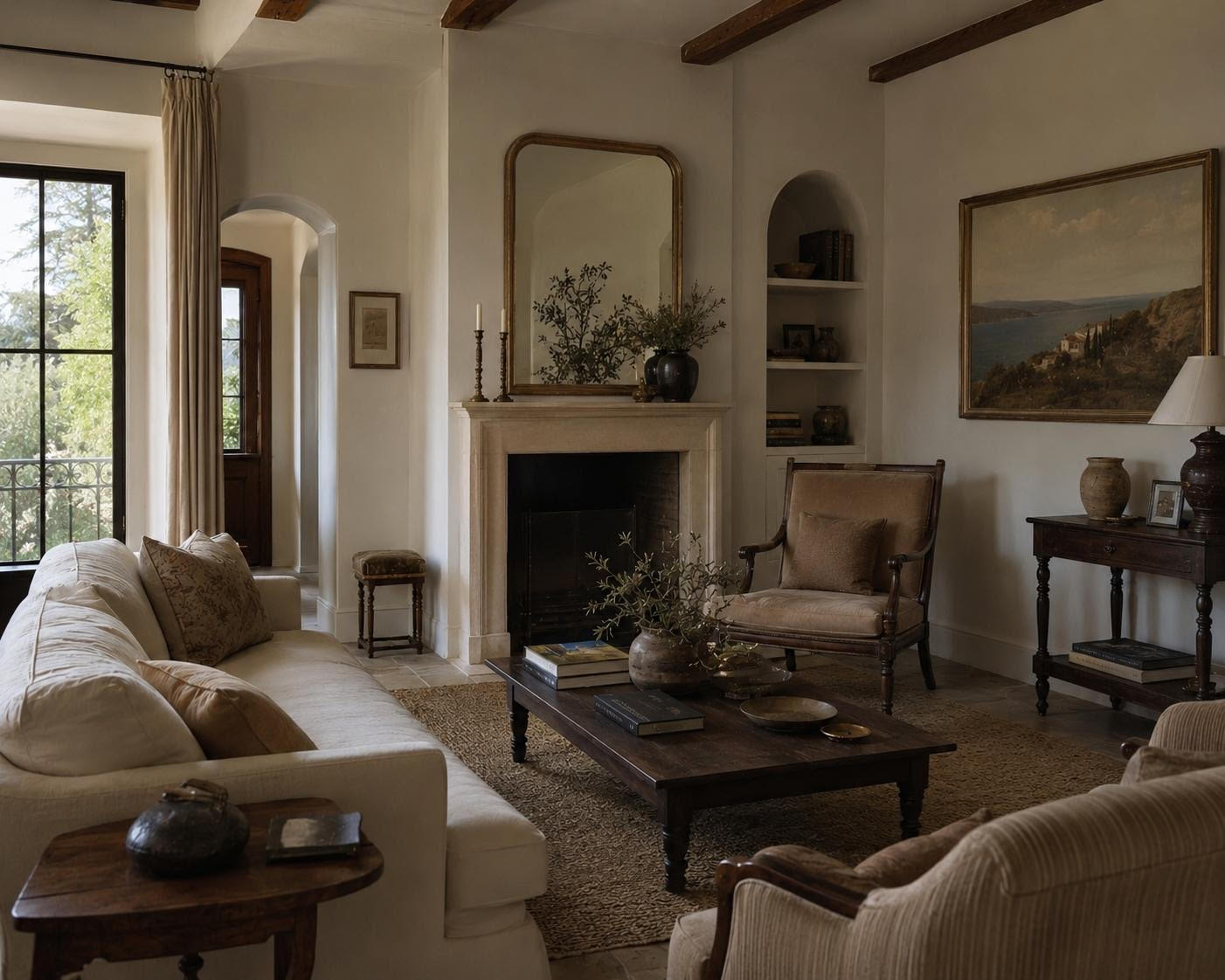
We often mistake luxury interior design for an exercise in accumulation. We assume that a sophisticated space requires sprawling square footage or an unattainable budget of rare antiques. In reality, the traditional European estates that define the "old money" aesthetic rely on something far more disciplined: architectural weight, texture, and the deliberate management of light.
An elegant home does not look like a modern showroom. It feels lived-in, layered, and deeply rooted in history. Whether you are curating a coastal villa or a minimalist urban apartment, bringing an old-world atmosphere to your living space comes down to a few foundational adjustments.
Below are the five essential design rules to elevate the posture of any room.
I. Lower the Light, Layer the Sources
The quickest way to strip a room of its elegance is through harsh, uniform overhead lighting. Luxury spaces understand the power of shadow and intimacy. A room should never be lit from a single source on the ceiling; instead, light should cast soft, warm pools at eye level.
The Rule: Turn off the overhead spotlights. Introduce a minimum of three distinct light sources per room using a mix of classic floor lamps, solid table lamps, and architectural wall sconces.
The Detail: Always select warm-toned LED bulbs (ideally between 2700K and 3000K). This mimics the soft, amber glow of traditional candlelight and wood-burning fireplaces, instantly softening the textures of your furniture.
II. Elevate the Drapery (High and Wide)
Window treatments are the tailoring of a room. Standard, short curtains hung directly above a window frame shrink the perceived height of a space and look distinctly commercial.
The Rule: Hang your curtain rods as close to the ceiling as possible, and extend the rod significantly wider than the current window frame.
The Detail: Ensure the fabric brushes or slightly puddles on the floor. When you draw the curtains open, the fabric should sit entirely outside the glass pane, framing the window beautifully while tricking the eye into believing the ceilings are feet higher than they actually are. Opt for heavy, natural weaves like structured linen or dense cotton velvet.
III. Prioritise Material Integrity
The old-money aesthetic is inherently analog and tactile. Synthetics, high-gloss plastics, and faux wood finishes age poorly and break the illusion of permanence. A sophisticated home values how materials feel to the touch.
The Rule: Ban synthetic textiles from your primary seating. Replace polyester blends with natural, organic fibers that develop a beautiful patina over time.
The Detail: Focus on deep-grained dark woods (like walnut, oak, or mahogany), unlacquered brass that tarnishes naturally with age, matte travertine stone, and thick-weave linen upholstery. It is far better to have a single, perfectly crafted solid wood side table than an entire room of veneered flat-pack furniture.
IV. Enter Architectural Weight
Traditional European interiors are defined by their bones—the structural details built directly into the walls. Modern white boxes feel cold because they lack these historic shadow lines.
The Rule: Apply subtle, geometric structure to flat walls using classic panel molding or picture-rail trim.
The Detail: Adding simple, paintable wood trim packages to a plain wall introduces immediate depth and historical character. When painted out in a cohesive, matte finish—such as a soft alabaster cream or an earthy, muted sage—the panelling catches natural side-light beautifully throughout the day.
V. Edit and Isolate the Decor
A common trap is filling every empty surface with small, generic decor items. True luxury relies on negative space. It allows exceptional pieces to breathe, drawing the eye to what is present rather than cluttering the view.
The Rule: Remove the clusters of small knick-knacks. Replace them with a single, massive statement piece on a surface.
The Detail: Instead of five small candles on a mantelpiece, display a single, oversized aged ceramic vessel or a heavy stone sculpture. Swap out galleries of small picture frames for one large, beautifully framed canvas or a vintage landscape print. This creates an immediate focal point and mimics the curated feel of a private gallery.
The Design Registry
To execute these transformations with the right visual balance, source from interior brands that prioritize classic silhouettes, natural textiles, and traditional craftsmanship.
Textures & Window Curation
Zara Home: An exceptional, accessible source for raw linen drapery, heavy stoneware, and rustic ceramic vases that look like salvage finds.
H&M Home: Consistently delivers premium, budget-friendly foundational elements, particularly their washed linen cushion covers and minimalist marble trays.
Furniture & Lighting Architecture
Westwing: Highly regarded for clean, European-inspired furniture profiles, offering beautiful travertine coffee tables and structured, minimalist lighting that anchors a room.
La Redoute / AM.PM: A fantastic destination for sourcing solid wood tables, organic linen sofas, and mid-century lighting styles that avoid the standard corporate aesthetic.
Maison du Monde: Offers an excellent selection of classic, antique-inspired silhouettes, from weathered wooden sideboards to traditional iron-framed mirrors that introduce immediate age and character to a space.
Continue Through the Archive.


