Curated Interiors
Discover More:
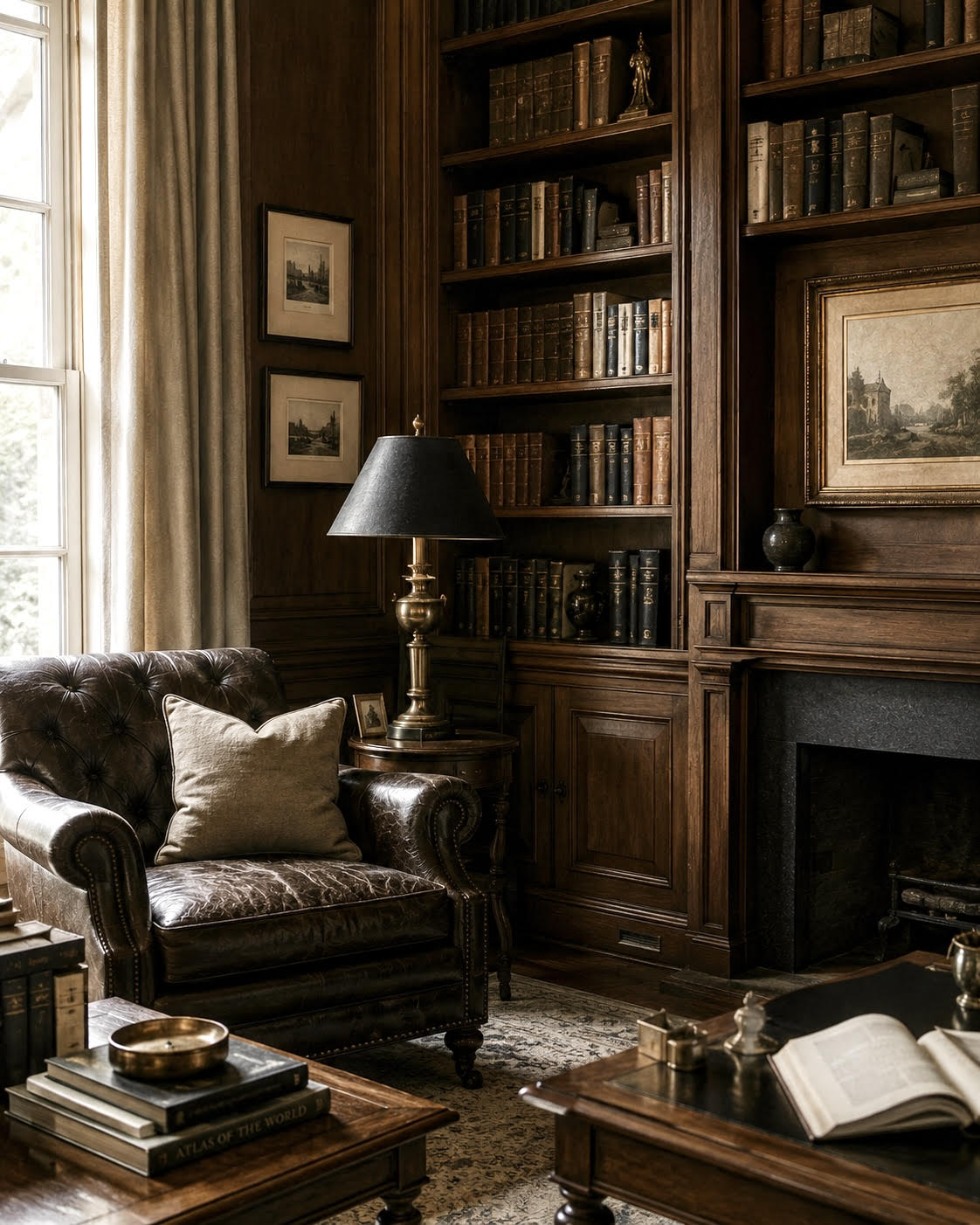
How to Style a Home Library: The Modern Blueprint
A great home library should never feel like a sterile bookstore or a cluttered storage unit. It is a deeply personal, architectural sanctuary meant for unwinding. The common mistake most people make when setting up a library or a reading corner is focusing purely on holding as many books as possible, which results in a space that feels visually heavy and uninspiring.
To build a library that feels refined, balanced, and timeless, you need to treat your books and shelve them as dynamic design elements.
Whether you are styling a full floor-to-ceiling study or a simple alcove bookcase, this guide breaks down the exact practical steps, lighting rules, and layout formulas to create a sophisticated space.
I. The Book Curation and Layout Formulas
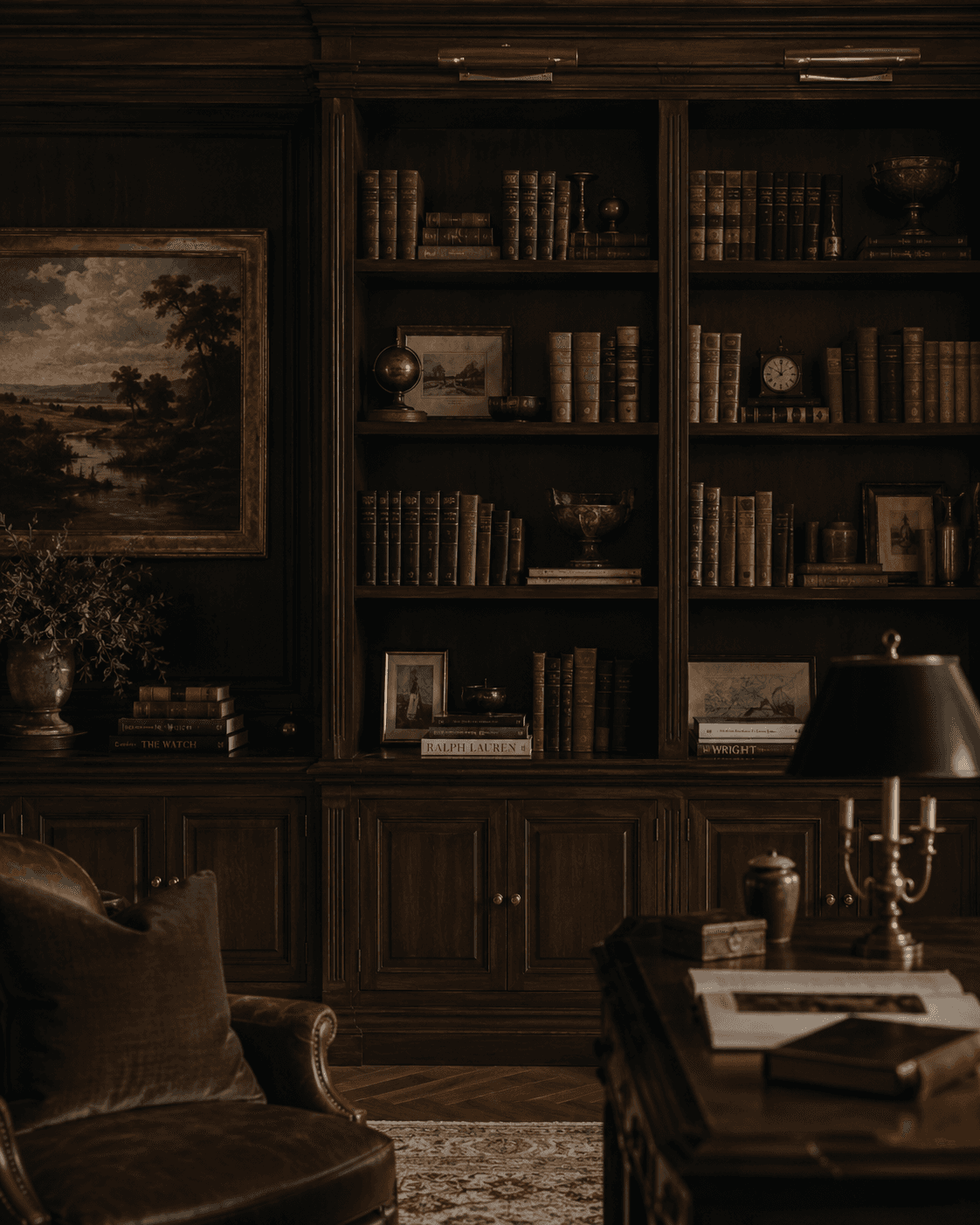
The secret to an elegant shelf is breathing room. If every single shelf is packed tightly with books from left to right, the eye has nowhere to rest, creating instant visual chaos.
The 70/30 Rule: As a strict rule of thumb, fill only 70% of your shelf space with books. Leave the remaining 30% as completely open, negative space. This highlights the wood or paint backing of your shelving and allows individual collections to stand out.
The Orientation Mix: Never stack books purely vertically. Break up the lines. On one shelf, group 5 to 7 books vertically on the left side, using a heavy, textural bookend (like raw travertine or solid brass). On the neighbouring shelf, create a flat, horizontal stack of 3 large art or history books.
The "Anchor" Styling: Use those flat, horizontal book stacks as pedestals. Place a single, high-quality object on top of the stack—such as a small ceramic vessel, a vintage magnifying glass, or a minimalist stone bowl.
II . Lighting: Eliminating the Overhead Glare
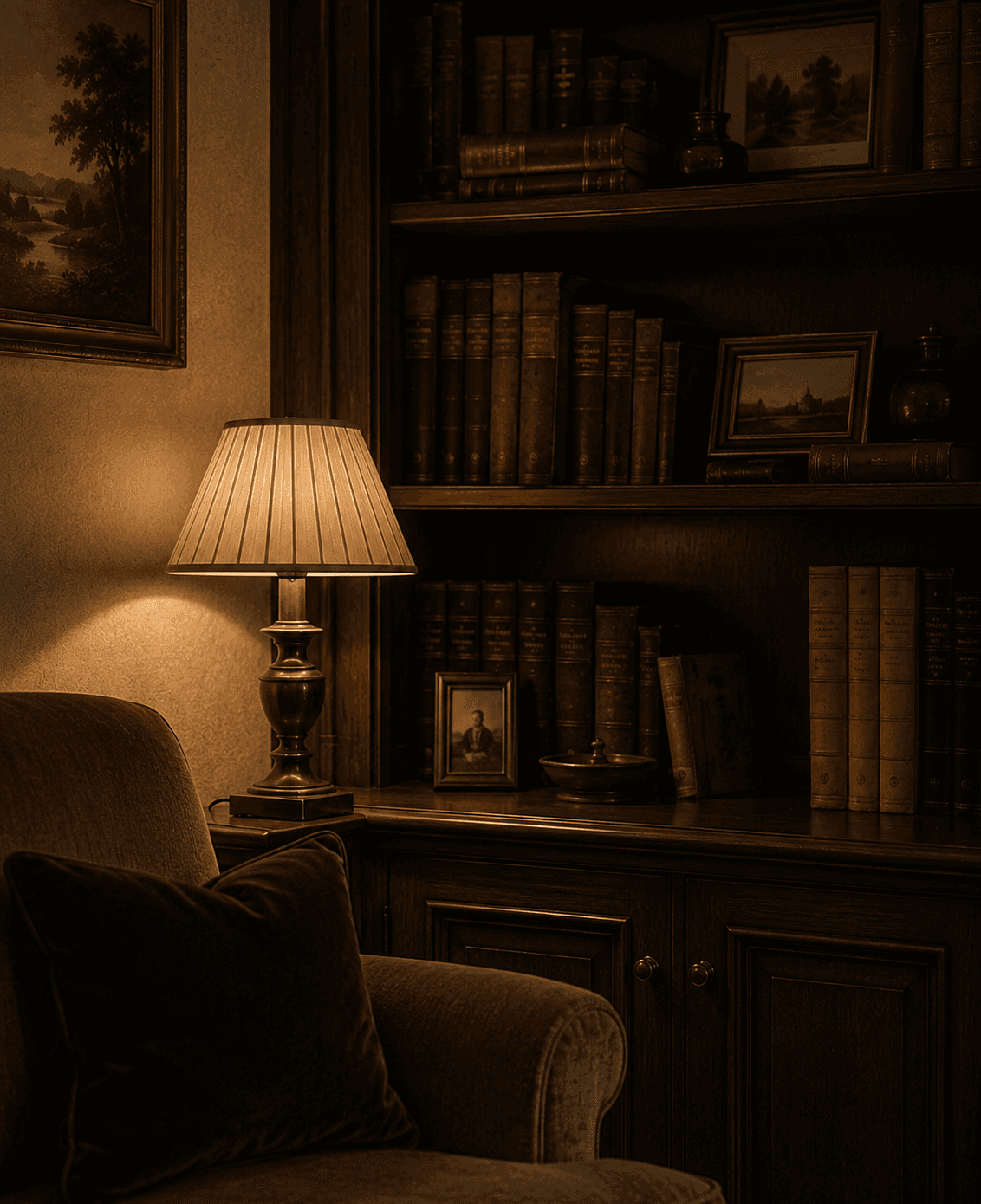
Harsh overhead lighting completely destroys the mood of a library. To make the space feel warm and inviting, you must entirely eliminate aggressive ceiling fixtures and rely exclusively on layered, low-level accent lighting.
The Temperature Standard: When purchasing lightbulbs for your library lamps, check the box for the Kelvin rating. You want 2700K (Warm White) or even 2400K (Warm Amber) . Avoid anything 3000K or higher, which introduces cold, blue, clinical light into a space that requires warmth.
The Two-Lamp Rule: Every reading corner needs exactly two light sources. First, an adjustable floor lamp positioned just behind your shoulder (aimed directly down at your lap for reading). Second, an ambient table lamp placed on a side table or nestled directly inside one of your deeper bookshelf openings to cast a soft, glowing background shadow.
III . The Seating and Textile Foundation
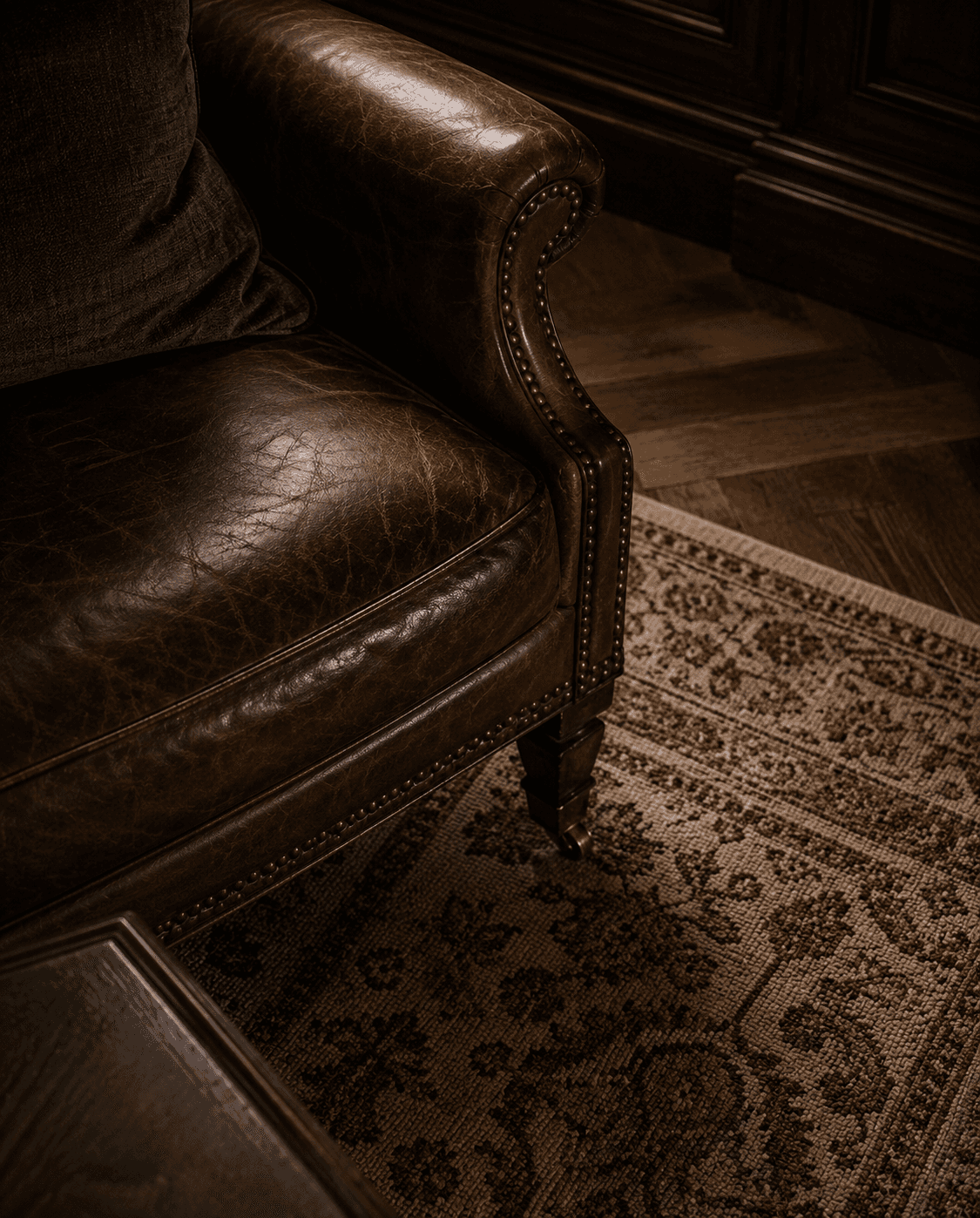
Your choice of seating anchors the room's entire aesthetic. A flimsy, modern office chair or a giant, puffy reclining sofa will instantly detract from the refined atmosphere.
Material Contrast: If your bookshelves are crafted from dark, polished woods like walnut or oak, contrast them with rich, textured upholstery. A classic mid-century lounge chair in distressed tobacco leather, dark olive mohair, or an ivory boucle fabric provides the perfect structural balance.
The Rug Anchor: A reading chair floating on a bare hardwood floor can feel disconnected. Anchor the seating arrangement with a small, high-pile wool rug in an earth tone (taupe, moss green, or cream). The rug should be large enough that at least the front two legs of your lounge chair and your side table sit entirely on top of it.
IV . Styling Checklist
Before you begin rearranging your space, use this direct checklist to audit your layout:
Strip the Jackets: Remove the glossy, plastic-feeling dust jackets from your hardback books. The raw cloth, linen, or leather bindings underneath look significantly more classic and cohesive on a shelf.
Organize by Tone, Not Colour: Don't organize your books in a bright rainbow pattern; this looks childish. Instead, group them subtly by tone—keep muted, dark spines together, and let cream or ivory linen spines occupy a separate section.
Incorporate Art: Lean small, framed sketches, monochrome etchings, or architectural line drawings directly against the back of your shelves, allowing a few books to slightly overlap the frame. This adds instant depth.
Continue Through the Archive.


