Timeless Travel
Discover More:

A Timeless Hotel Guide To The Italian Riviera
By Blackthorne & Rowe | The Travel Archives
"Travel isn't about seeing everything, but forgetting the clock.”
When planning an escape to the Italian Riviera, it is incredibly easy to fall into the standard tourist tracks. While iconic destinations have their charm, they often come with packed crowds and commercialized resort experiences that dilute the true heritage of Liguria.
If you are looking for a more deliberate, unhurried experience, the choice of where you stay changes everything.
Instead of booking a generic luxury chain, look toward the region's masterfully preserved private villas, converted monasteries, and heritage estates. Here are three exceptional, historic boutique properties that sit comfortably below the mass-tourist radar, along with practical context on how to experience them.
I. Hotel Cenobio dei Dogi (Camogli)
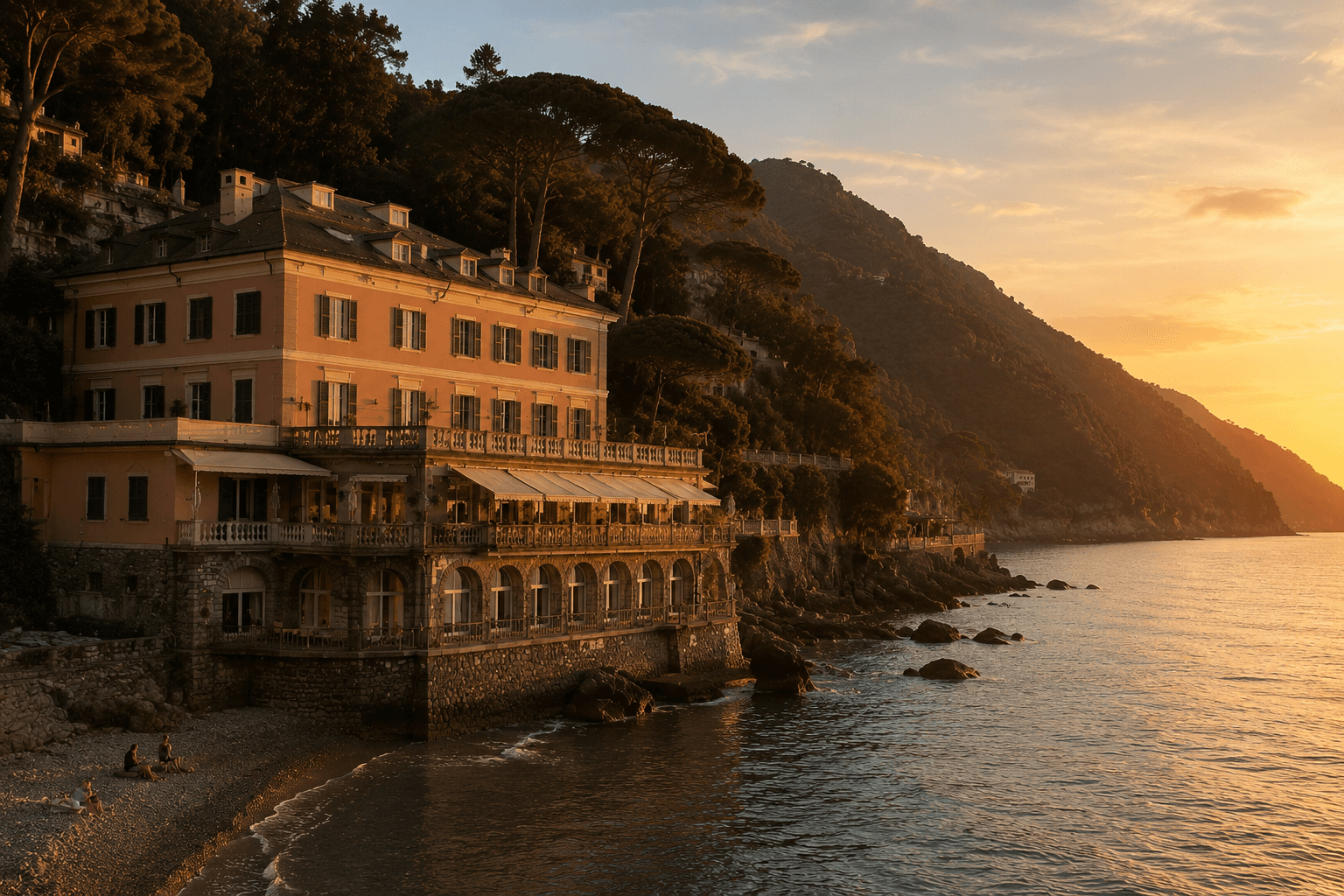
The History & Architecture: Located in the quiet, picturesque fishing village of Camogli, Hotel Cenobio dei Dogi originally served as a summer residence for the Doges of Genoa in the 16th century. Unlike modern luxury builds, the architecture here relies on deep-set stone masonry, classic Ligurian pastel hues, and sprawling terraces that look directly across the Gulf of Paradise. It feels less like a commercial hotel and more like an open-air maritime estate.
Why It's Perfect For Peace & Luxury: It offers a completely private beach and saltwater pool tucked away from day-trippers. The internal lounges maintain their original heritage with antique furniture, classic terracotta tiling, and expansive windows designed to flood the communal spaces with soft Mediterranean light.
The Sartorial Context: The relaxed, old-world elegance of Camogli calls for smart, breathable tailoring. For an early evening drink on the hotel's panoramic terrace, wear an unstructured cream linen sport coat paired with a light blue high-twist cotton shirt, charcoal pleated trousers, and dark suede loafers.
II . Grand Hotel Miramare (Santa Margherita Ligure)
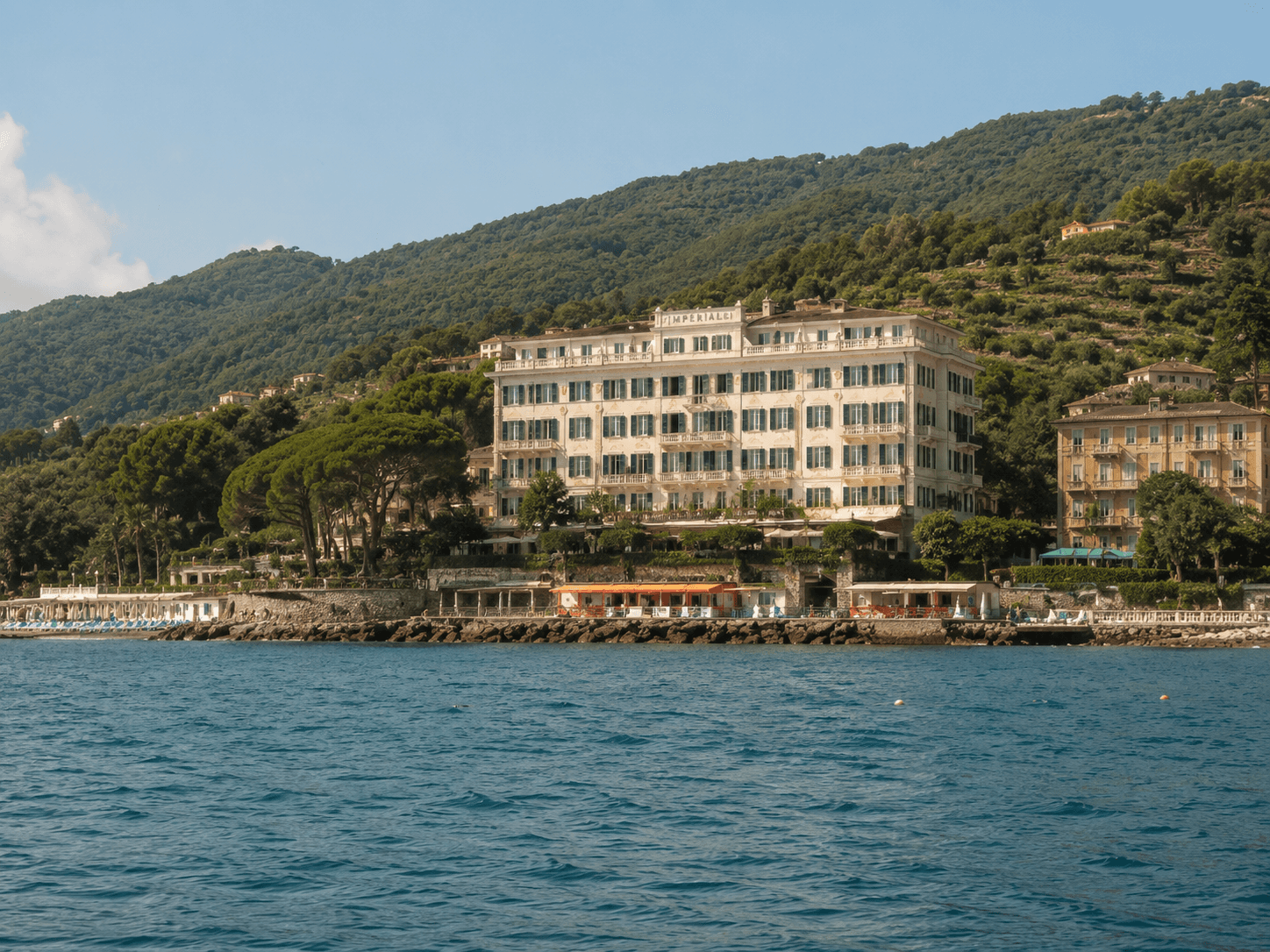
The History & Architecture: While Santa Margherita sits adjacent to highly trafficked areas, the Grand Hotel Miramare offers an authentic step back into the early 20th century. This Liberty-style white palace features magnificent frescoed ceilings, crystal chandeliers, and classic Italian formal gardens. It is famous for hosting Guglielmo Marconi in 1933 while he conducted his ground breaking radio wave experiments from the hotel terrace.
Why It's Perfect For Peace & Luxury: The property retains its classic grand tour atmosphere without feeling dated. The sweeping marble staircases, polished parquet flooring, and saltwater pool surrounded by a century-old park make it a masterclass in architectural preservation.
The Sartorial Context: This estate calls for sharp, classic lines. Read into a monochromatic or earth-toned summer capsule: a tailored tobacco brown linen-silk blend blazer, white lightweight cotton trousers, and minimalist leather driving shoes.
III . Hotel Porto Roca (Monterosso al Mare)
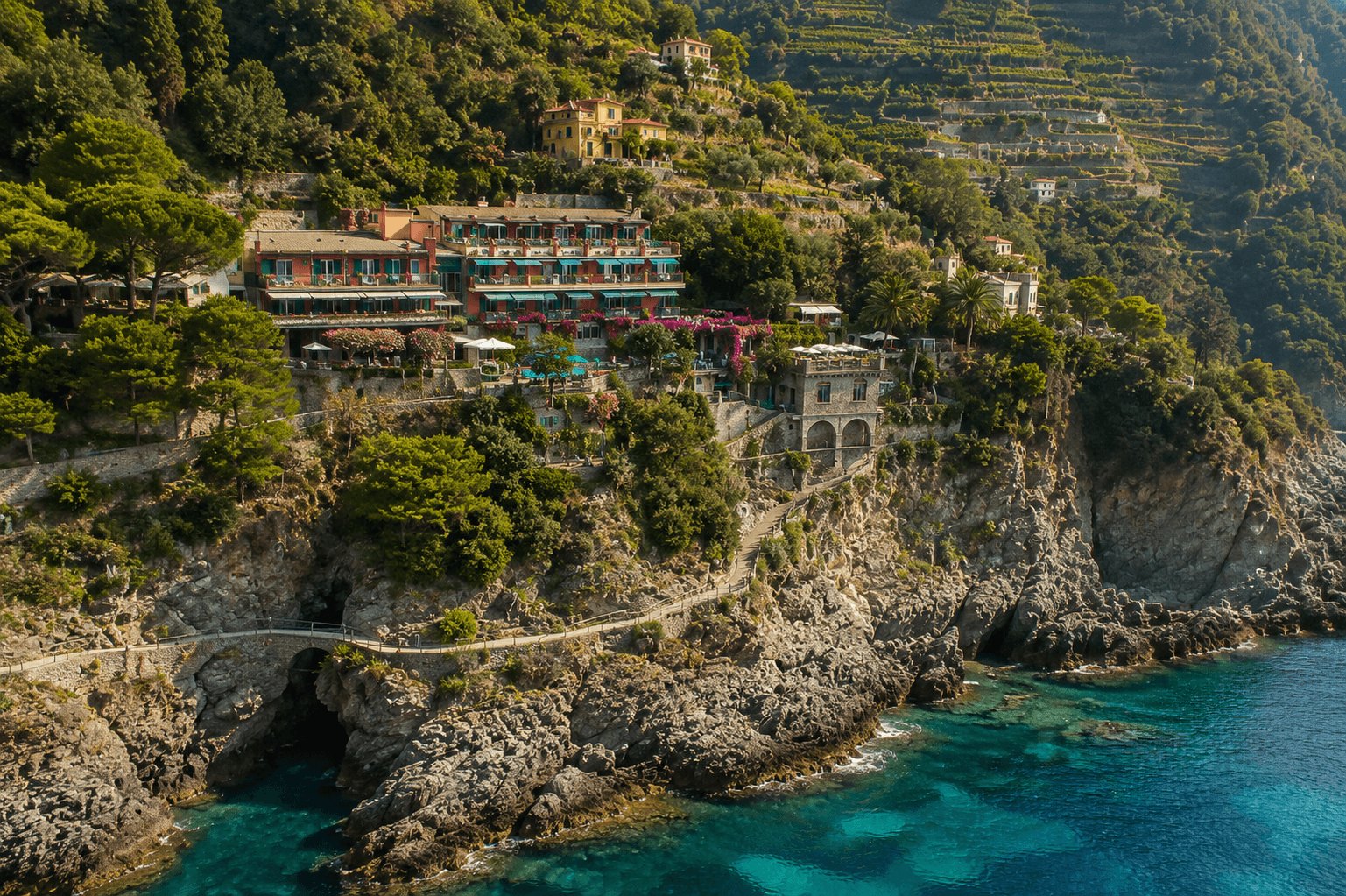
The History & Architecture: Perched dramatically on a sheer cliff edge just outside the main cluster of Monterosso al Mare, Hotel Porto Roca offers a classic, villa-style retreat that has been family-run for generations. The architecture emphasizes its striking natural vantage point, utilizing wide stone-arched terraces, cliffhanging panoramic walkways, and an infinity pool that blends seamlessly into the open Ligurian Sea. It feels entirely detached from the heavy foot traffic of the villages below.
Why It's Perfect For Peace & Luxury: While the Cinque Terre is generally known for day-trippers and small guesthouses, Porto Roca retains the quiet grandeur of a traditional European resort. The interiors are decorated with antique wooden writing desks, classical sculptures, and elegant lounge spaces that preserve an authentic 20th-century aesthetic.
The Sartorial Context: The dramatic cliffside setting calls for relaxed, elegant knitwear. For an afternoon looking over the open water, wear a dark olive green knit cotton polo paired with stone-coloured linen trousers, tortoise-frame sunglasses, and premium calfskin sandals.#
IV . The Practical Travel Checklist
To get the absolute most out of a historic Ligurian itinerary, keep these three logistics in mind:
The Booking Window: Avoid July and August entirely. To experience these historic properties without the surrounding regional congestion, book your stay for late May or the first two weeks of September. The climate is ideal, and the coastal towns breathe much easier.
Transportation: The narrow, winding coastal roads of Liguria can be incredibly challenging to navigate and park on. Use the regional train networks or hire a private boat taxi directly from the hotel docks to travel between coastal villages.
Continue Through the Archive.


