The Sartorial Archive
Discover More:

How to Achieve the 'Old Money' Hairstyle Look
Trends in men’s grooming are notoriously short-lived. Every season brings a new wave of highly stylised cuts that often require intense daily styling and look dated almost as soon as they peak. Truly classic hairstyles, however, operate under a different rule: it should never look forced.
The hairstyles worn by generations of men do not rely on aggressive fades or heavy styling products. Instead, their appeal lies in structural balance, natural movement, and working with the hair’s natural growth patterns. It is an approach to grooming that prioritises looking good in every setting—a style that looks just as appropriate in a boardroom as it does on a weekend coastal trip.
To achieve an authentic, understated look, one must understand the structure of a classic cut and exactly how to communicate it to a barber.
I. The Classic Side Part
The side part remains the absolute cornerstone of traditional men's grooming. It provides an immediate, clean frame for the face and transitions effortlessly between formal and casual settings.
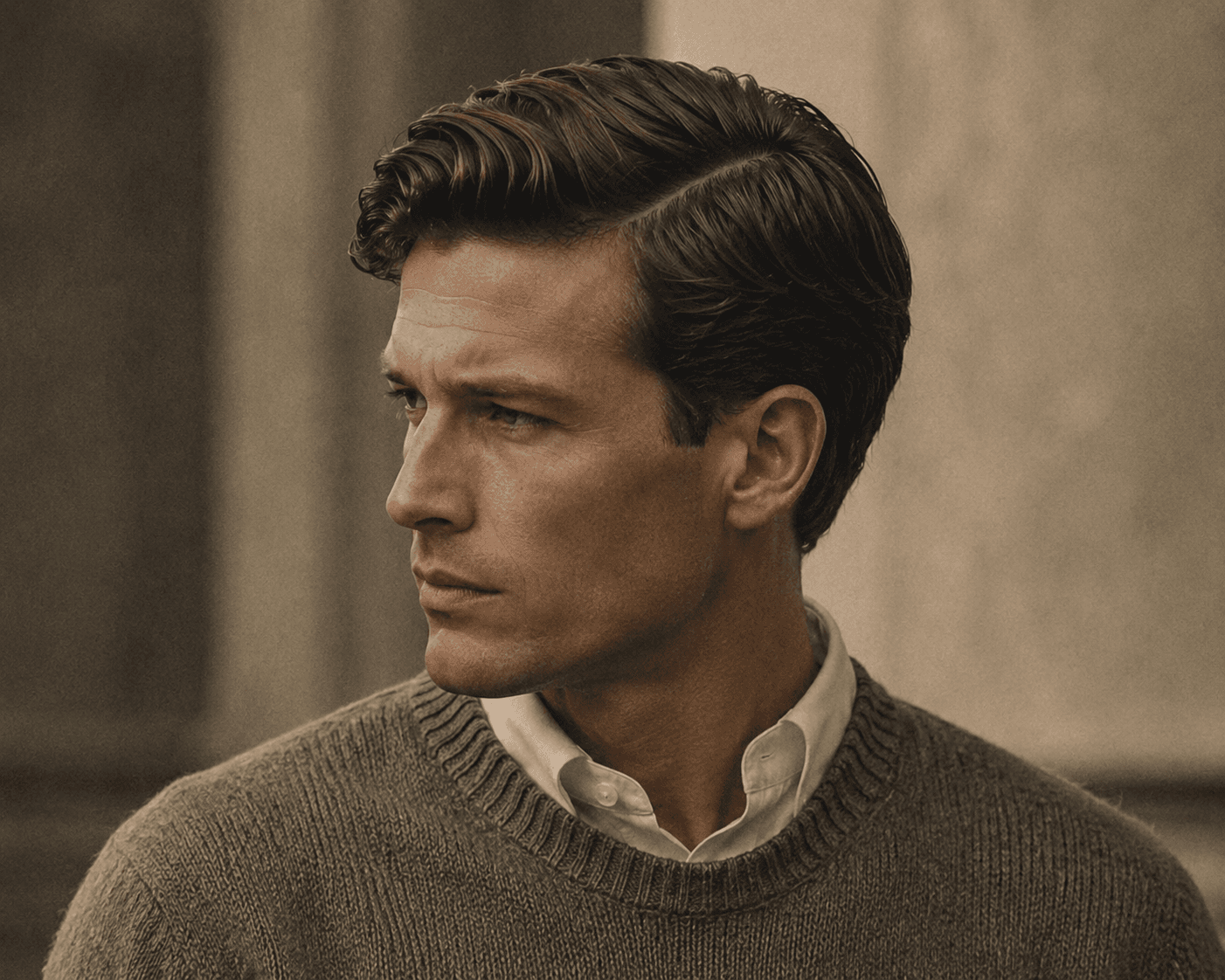
What to Ask the Barber: Request a traditional scissor-cut side part with a soft taper on the back and sides. Explicitly ask them to leave enough length on top—roughly three to four inches—so the hair can be swept cleanly to the side without standing upright. Emphasize that you want a natural perimeter rather than a harsh, clipper-lined edge.
The Styling Rule: Avoid heavy, high-shine pomades that make the hair look to stylised. Instead, apply a small amount of lightweight, matte-finish cream or paste to damp hair, find your natural parting line using a comb, and let it dry naturally for soft, organic hold.
II. The Slick Back
The slick back is an exercise in clean lines and low-maintenance sophistication. It removes bulk from the sides of the face while highlighting a strong jawline and brow.
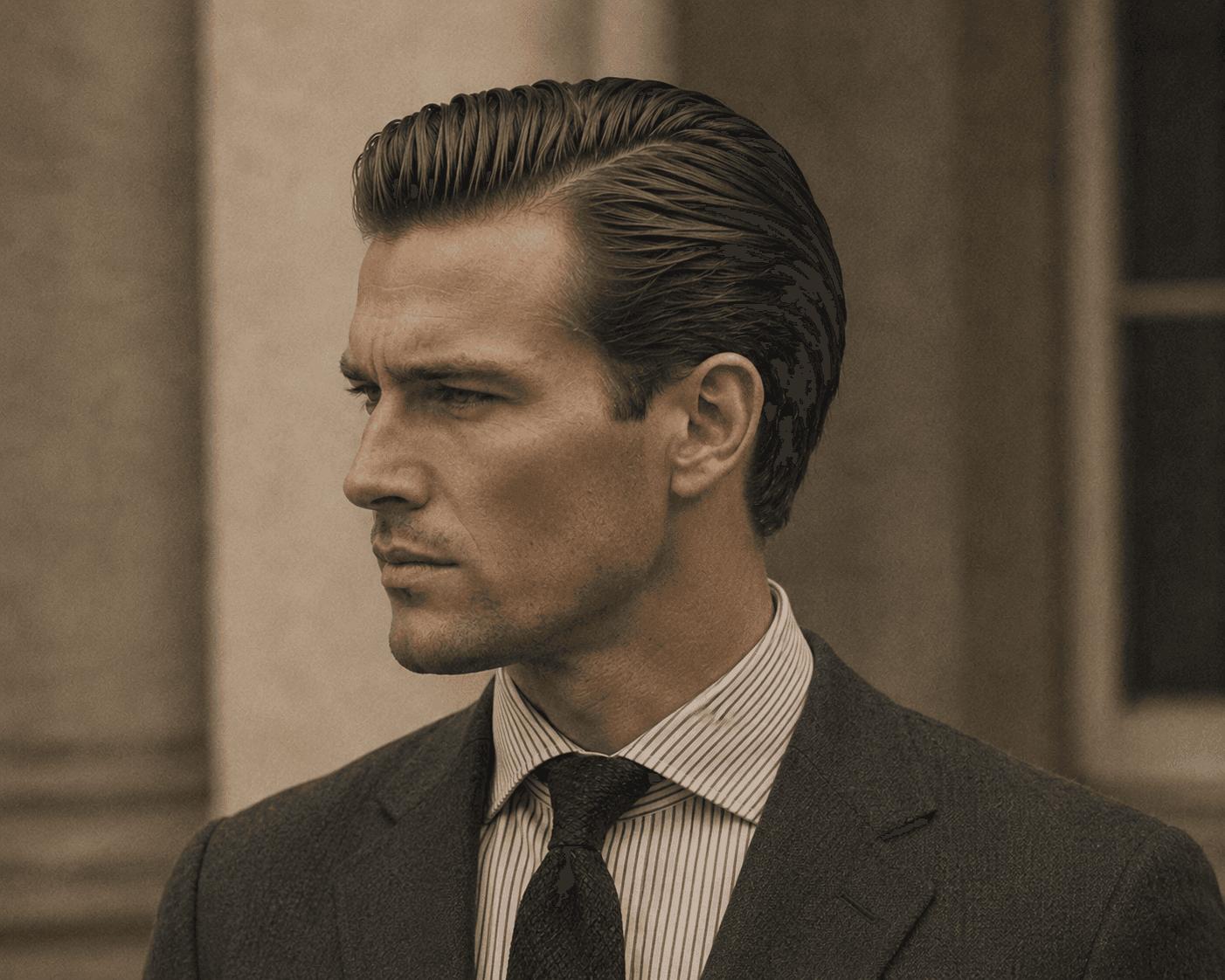
The Construction: Unlike the rigid, wet-look styles of the early 20th century, the modern classic slick back relies on texture and flow. The hair is swept backward following the natural slope of the head, allowing for slight volume at the front rather than laying completely flat.
What to Ask the Barber: Ask for an all-scissor cut with a gradual taper on the sides. The top needs significant length—ideally four to five inches—to ensure the hair can stay swept back entirely under its own weight. The transition from the top to the sides must be blended smoothly without any disconnected steps.
The Styling Rule: Warm a nickel-sized amount of medium-hold, low-shine grooming cream between your palms. Work it through the hair from front to back, then use your fingers or a wide-tooth comb to direct the hair away from the face. This preserves natural texture and prevents the style from looking flat.
III. The Natural Flow
The natural flow is the epitome of relaxed, off-duty elegance. It embraces natural texture, waves, and volume, making it the perfect choice for men with thicker or slightly wavy hair.
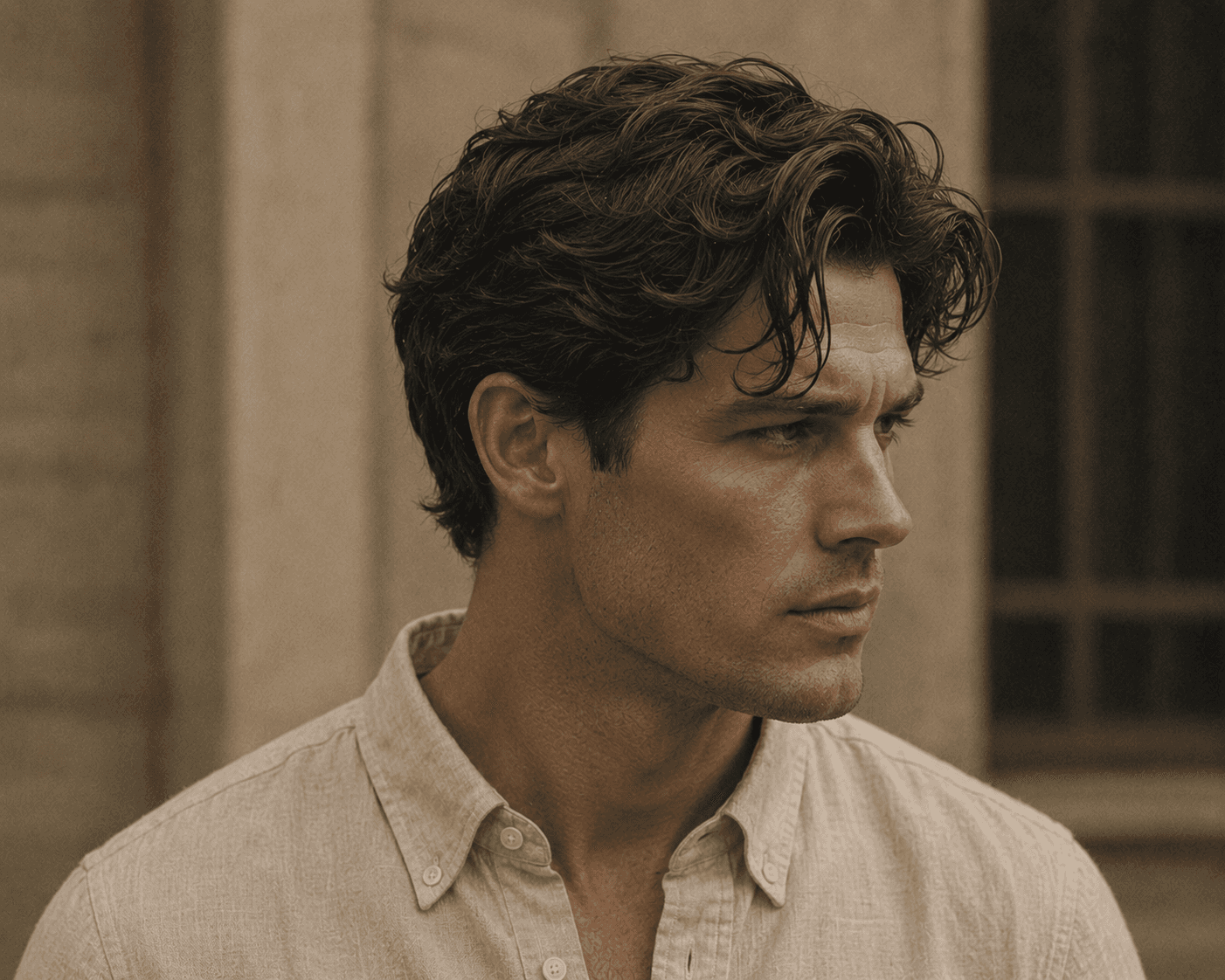
The Construction: This style relies entirely on movement. It sits lower on the neck and frames the face softly, projecting an air of effortless style that doesn't feel overly manicured.
What to Ask the Barber: Ask for a mid-length, layered cut utilizing point-cutting techniques to add internal texture and remove excess bulk. The back and sides should remain soft and full rather than sharply tapered, allowing the hair to tuck naturally around the ears.
The Styling Rule: This style requires minimal product. Rub a few drops of lightweight hair oil or sea salt spray through damp hair to enhance your natural wave pattern, then dry thoroughly with a towel or low-speed blow dryer. Let the hair settle naturally throughout the day.
IV. The Brooks Brothers Cut
Named after the classic Ivy League silhouette, this cut balances the clean neatness of a short haircut with the soft volume of a longer style. It is tidy, understated, and exceptionally versatile.
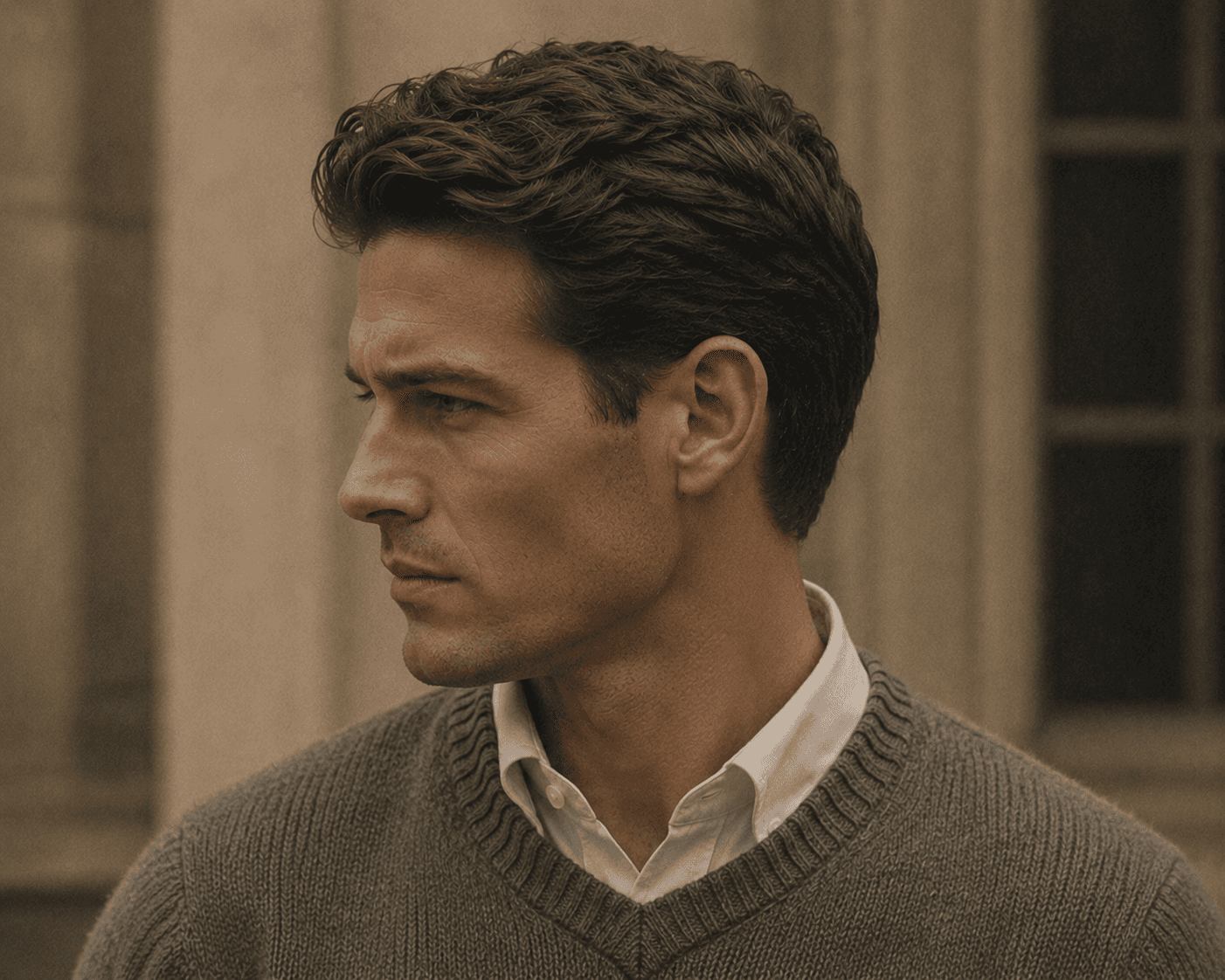
The Construction: The top is kept relatively short and uniform, while the sides are cleanly tapered down to the neck. It doesn't rely on a distinct parting line, choosing instead to let the hair lay forward and softly to the side.
What to Ask the Barber: Request a classic ivy league or short crew cut, executed entirely with scissors or high-guard clippers (nothing lower than a #4 guard). The front hairline should be left slightly longer than the crown to allow for a gentle, upward sweep at the fringe.
The Styling Rule: A minimal touch of matte clay is all that is required. Work the product through the roots on top, pushing the front up and slightly to one side to create a clean, structured finish that holds its shape all day.
The Golden Rule of Barber Communication
The most common mistake in men's grooming is relying on vague terminology. To ensure you get an authentic, classic result, remember these three rules on your next visit:
Ban the Word "Fade": Unless you want a highly contemporary, skin-exposed look, use the word "Taper" instead. A taper preserves the classic silhouette of the hair.
Specify Scissors: Request an all-scissor or scissor-heavy cut. Scissors follow the unique contours of your skull far better than mechanical clipper guards, resulting in a completely tailored fit.
Show, Don't Just Tell: Keep your Blackthorne & Rowe style graphics saved on your phone. Showing your barber the clean, unblurred matrix pin gives them an immediate, unambiguous visual target for your cut.
Discover more grooming curations, capsule wardrobe blueprints, and classic lifestyle essays inside the Blackthorne & Rowe Archive.
Continue Through the Archive.


