Curated Interiors
Discover More:
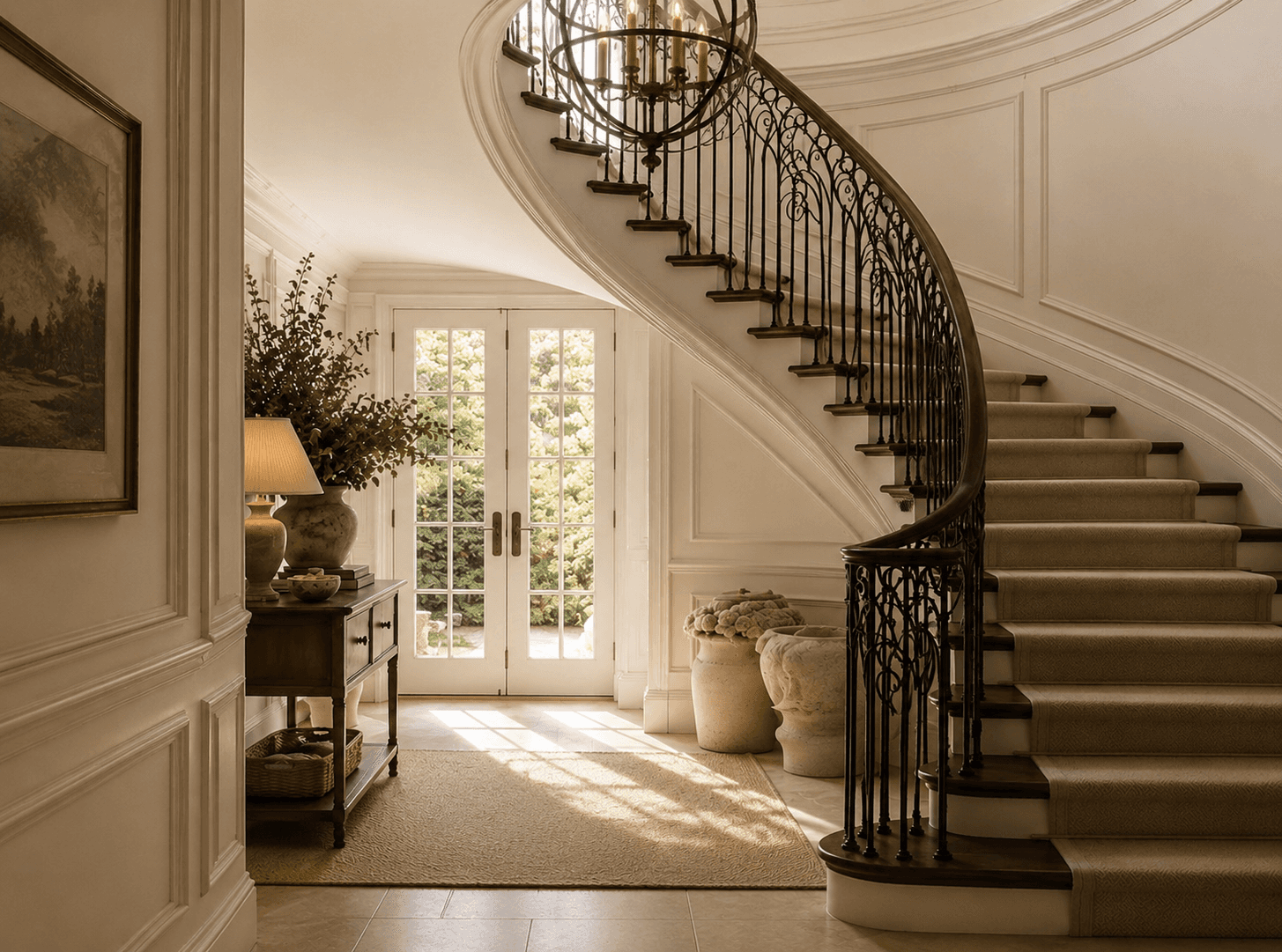
Trends in interior design move at an exhausting pace. Over the last decade, we have witnessed the rise and fall of stark, clinical minimalism, quickly followed by decorative eras that feel dated almost as soon as they are photographed. Truly elegant spaces do not participate in this cycle.
When we look at the definitive, generational estates of Europe—the villas tucked into the hills of Florence or the historic townhouses of London—their appeal does not rely on a single design era. Instead, it comes from a philosophy often described as "the old money aesthetic" or "timeless warm minimalism." It is an approach to design that values architectural integrity, natural materials, and the slow accumulation of pieces that carry weight. It is a home that feels curated over decades, rather than styled in a weekend.
To bring this understated luxury into a modern space, one must follow three foundational, highly actionable principles.
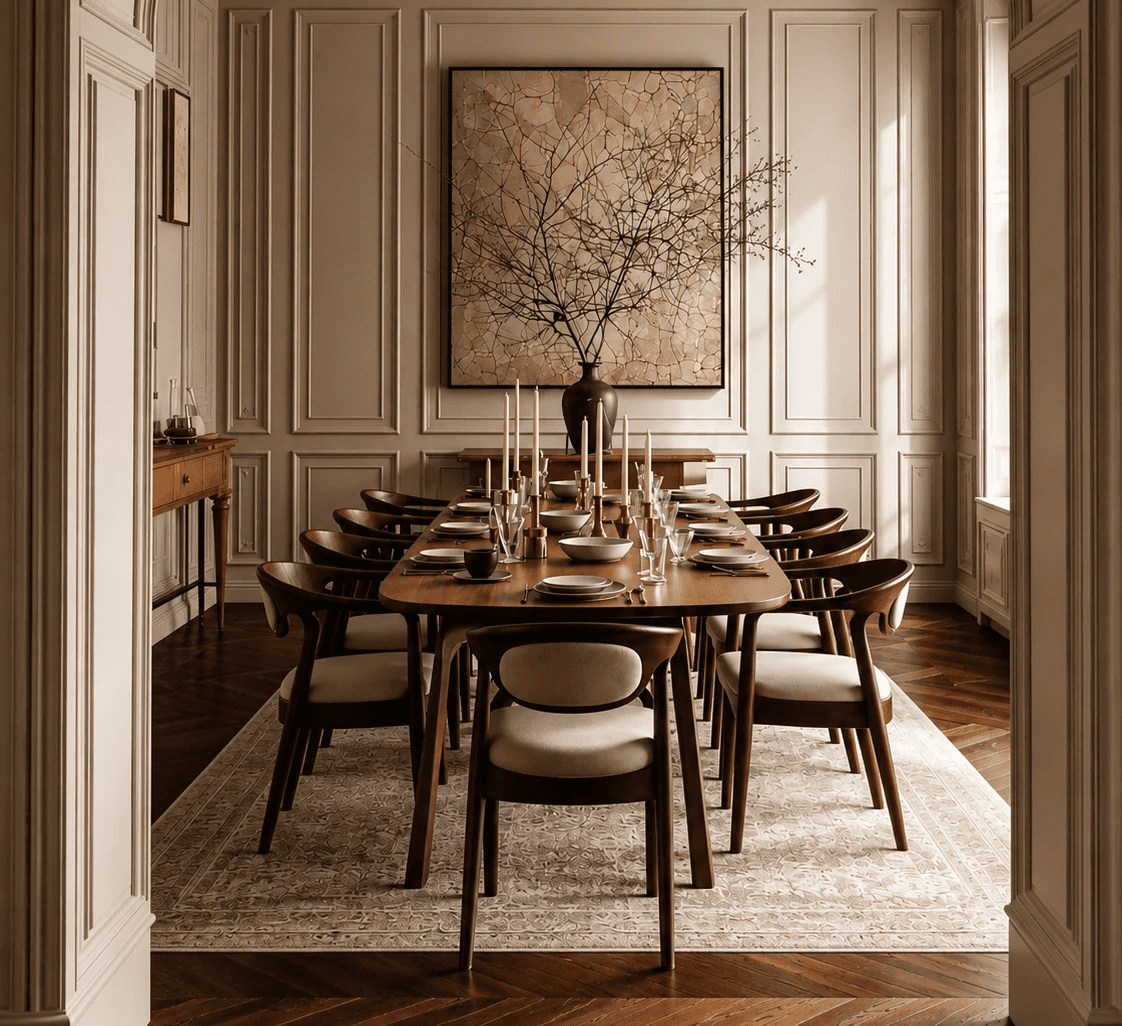
I. Build a Material-First Baseline
The bedrock of a timeless interior lies in the uncompromising quality of its raw materials. Synthetic finishes, faux wood grains, and engineered surfaces immediately break the premium illusion of heritage. Instead, look to elements that age gracefully and develop a natural patina over years of use.
The Source Guide
When sourcing furniture and hard surfaces, prioritize unpolished travertine, honed arabescato marble, solid brass, and tight-grained woods like English walnut or reclaimed oak.
The Styling Rule
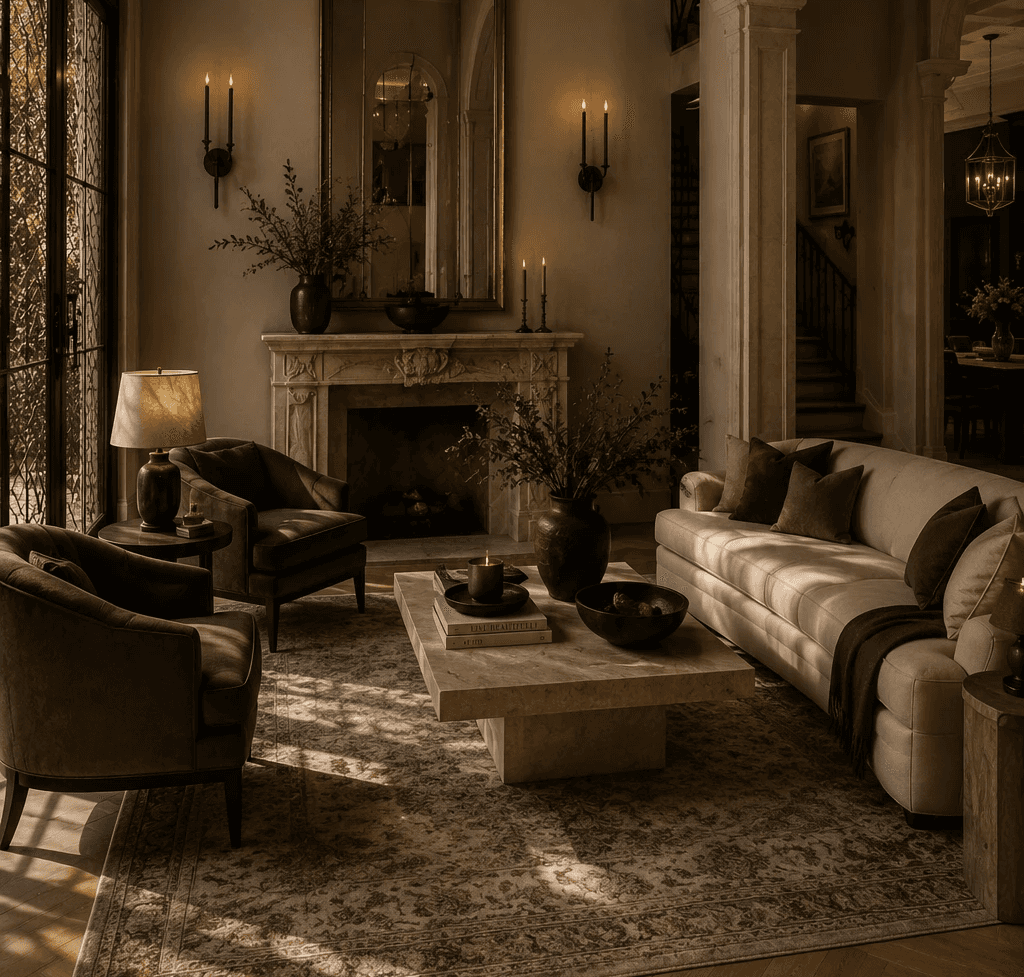
A monolithic travertine coffee table or a raw, textured linen sofa does not require intricate ornamentation; Its luxury is entirely derived from its weight, its texture, and its tactile presence. Avoid high-gloss varnishes or heavily lacquered surfaces. Choose matte, brushed, or oil-rubbed finishes that allow the natural grain of the material to breathe.
II. Implement a Low-Contrast, Earth-Driven Palette
Stark, clinical whites and cold greys can make a modern home feel more like a commercial gallery than a sanctuary. The heritage home relies on a low-contrast, deeply soothing colour story inspired entirely by the natural world.
The Colour Formula
To structure your space seamlessly, use a disciplined three-tiered distribution:
The 60% Base (Walls, Architecture & Large Rugs): Alabaster, Warm Bone, French Ivory, or Soft Chalk.
The 30% Secondary Layer (Primary Furniture & Heavy Textiles): Oatmeal linen, un-dyed bouclé, camel wool, or soft taupe.
The 10% Accent Anchor (Wood, Metal & Fine Accents): Deep espresso walnut, antique unlacquered brass, or oxidized iron.
The Contrast Rule
By keeping the contrast low across your walls and large furniture pieces, the boundaries of the room visually recede. The space instantly feels more expansive, calm, and expensive. For subtle pops of color, avoid bright saturations. Stick strictly to historic, dusty hues like a muted sage green, an understated terracotta, or a faded slate blue.
III. Curate the Layered "Anti-Showroom" Look
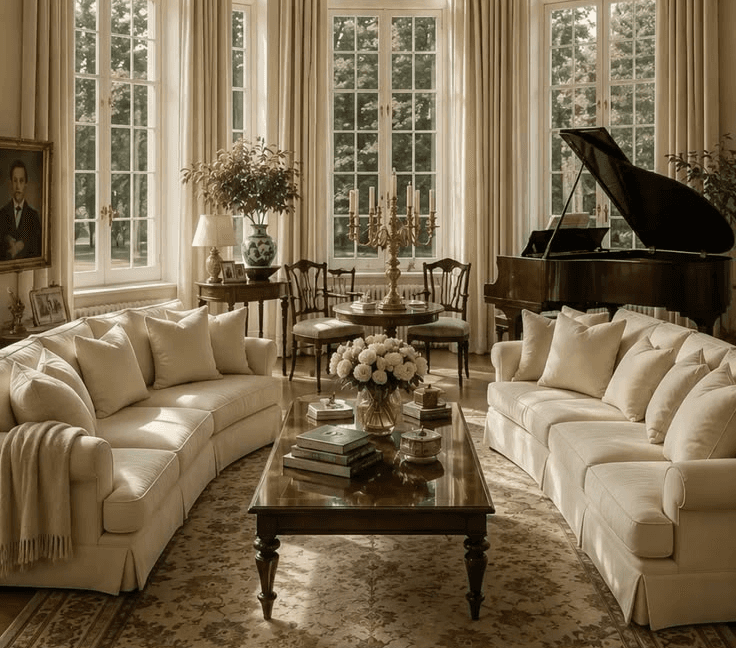
A space filled entirely with brand-new, matching contemporary furniture lacks character. The secret to an authentic, lived-in atmosphere is the juxtaposition of clean, modern lines with aged, historic objects.
Three Actionable Styling Exercises
The Art Contrast: Hang a dark, moody 19th-century landscape oil painting in a tarnished gilt frame directly above a sleek, low-profile minimalist sofa. The historical weight of the art perfectly balances the clean lines of modern tailoring.
The Coffee Table Layer: Avoid generic decore objects. Instead, allow a heavy, staggered stack of hardcover architecture and art monographs to rest alongside a single, weathered antique terracotta vessel sourced from the Mediterranean.
The Multi-Era Metal Mix: Stop matching your metals perfectly across a room—a hallmark of mass-produced design. Pair an unlacquered brass cabinet pull with a matte black iron floor lamp. This deliberate friction makes the lighting feel collected over a lifetime rather than purchased all at once from a single catalogue.
An Intentional Way of Living
Ultimately, creating an old money interior is an exercise in restraint. It requires stepping away from the impulse to panic-buy trendy decore pieces and instead choosing to invest in longevity. By focusing on raw architectural materials, a low-contrast warm palette, and a careful balance of history and modern minimalism, your home stops looking like a temporary trend report and begins to feel like a legacy.
Discover more interior curations, capsule wardrobe blueprints, and classic lifestyle essays inside the Blackthorne & Rowe Archive.
Continue Through the Archive.


