Curated Interiors
Discover More:

Reimagining the Workspace as a Permanent Choice
We have all seen the sterile, hyper-minimalist home office setups that dominate social media feeds: a clean white desk, a plastic ergonomic chair, and a single monitor glowing against a blank wall. It feels less like a place for deep thought and more like an interim corporate cubicle.
For those who view their home as an extension of their lifestyle, a workspace shouldn't look like an afterthought. It should carry the same weight, history, and architectural permanence as a classic gentleman's library or a private study.
If you are setting up a home office to last for the next decade, the goal isn't to buy office furniture. It's to curate a room that rewards focus and feels entirely grounded.
I. The Anchor: Choosing a Desk with Weight

The desk dictates the room's entire energy. When you step into the space, you want to see an object that feels permanent, not something packed flat into a shipping box.
The Materials: Look toward dense timbers with prominent grain—think dark walnut, heavy oak, or the rich, swirling patterns of olive ash burl. If wood isn't your preference, a desk anchored by clean stone columns or a vintage leather-inlaid writing table introduces immediate tactile history.
The Placement Strategy: Try floating the desk in the middle of the room rather than pushing it flush against a wall. Facing the door or angling the desk toward a natural window view changes the entire volume of the space, making it feel less like a modern workspace and more like a proper executive retreat.
II. The Atmosphere: Light That Calms the Mind
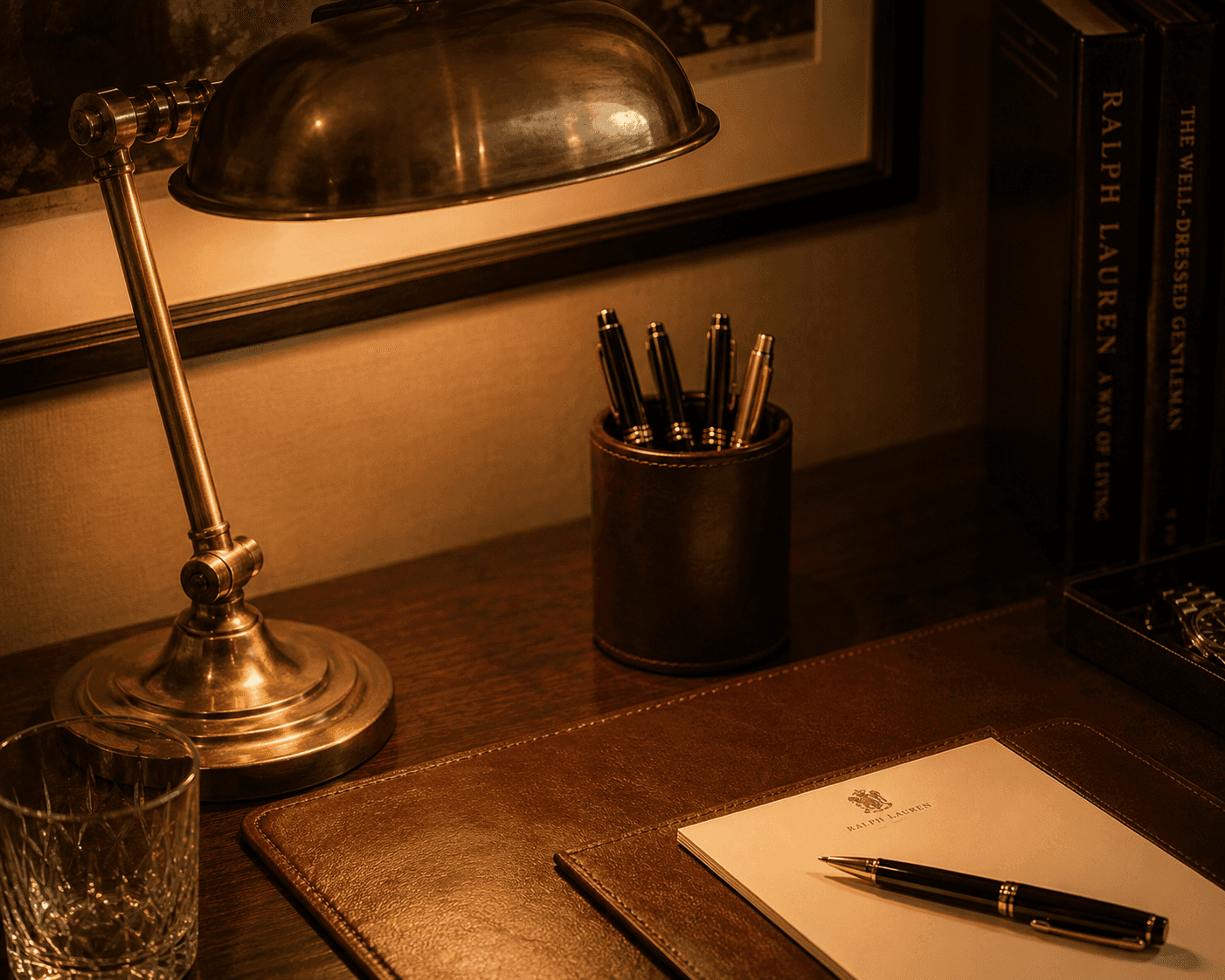
Nothing ruins an aesthetic faster than harsh, overhead lighting. If a room feels clinical, your work will feel clinical too.
The Rule of Layers: Never rely on a single light source. Instead, use three distinct points of light to create dimension. Position a low, diffused floor lamp in a corner, illuminate your bookshelves with subtle accent lighting, and place a heavy brass task lamp or a classic library light directly on the desktop.
The Warmth Factor: Stick strictly to warm, low-temperature bulbs 2700K. It softens the shadows, accents the natural wood grain, and reduces eye strain when you find yourself typing late into the evening.
III. The Details: Elevating the Daily Routine
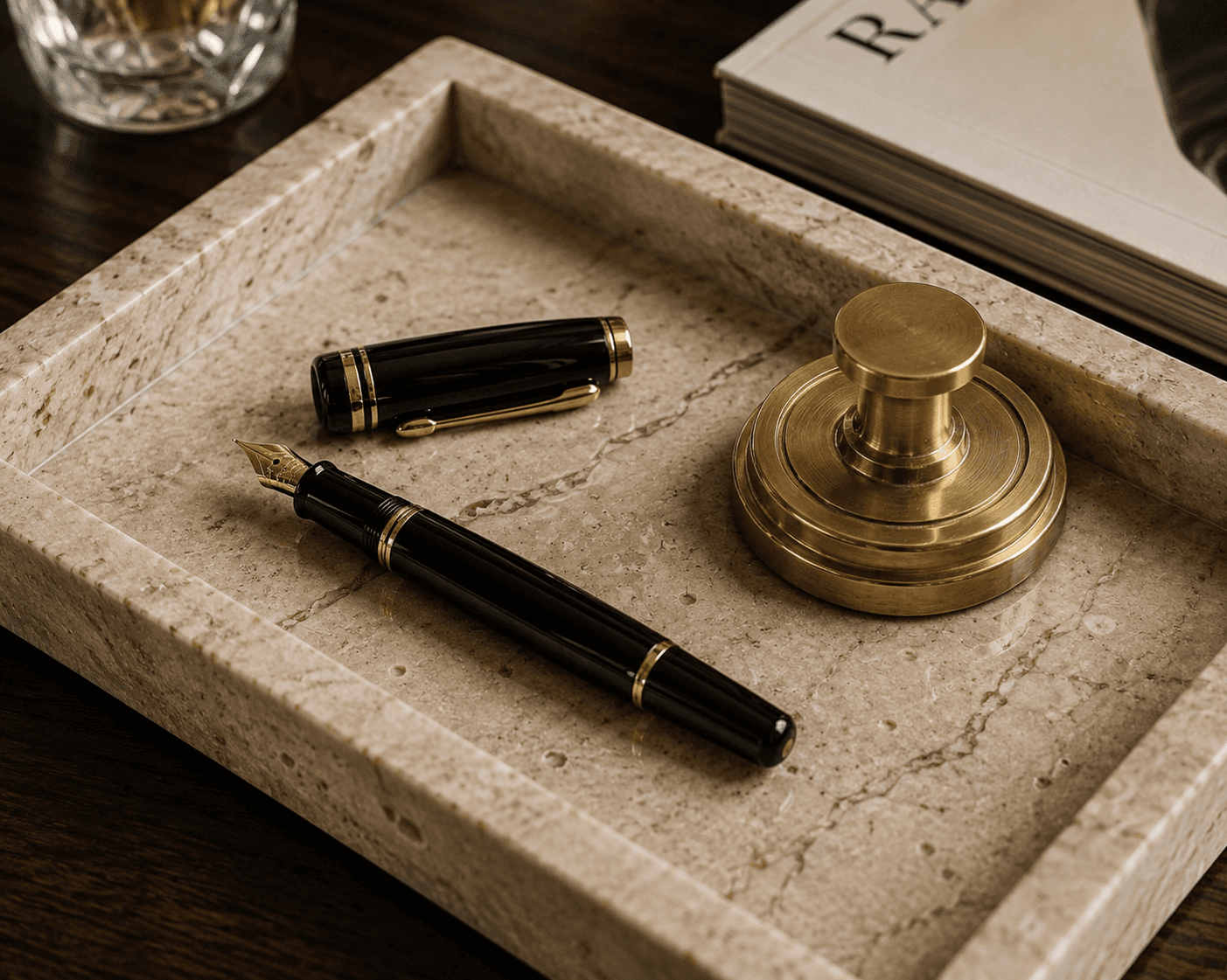
A workspace needs to remain functional, but the tools you touch every day should be a pleasure to use. You can easily clear away the clutter without stripping the desk of its personality.
The Curation: Swap out standard plastic organizers for materials that age beautifully. Use a heavy travertine tray to catch your fountain pens, a thick, stitched leather blotter to anchor your keyboard, and solid brass pieces to keep your papers in place.
The Essentials List: A Curation Guide
To bring this look together, you only need a handful of highly deliberate pieces. Focus on items that rely on texture rather than excessive ornamentation to do the talking.
The Leather Desk Blotter: A large, smooth writing surface provides a tactile barrier between your tech and the wood grain. Opt for vegetable-tanned leather that will develop a rich patina over years of use.
The Heavyweight Catchall: A solid travertine or green marble dish keeps daily fountain pens, watches, or keys organized in one dedicated footprint.
The Solid Brass Task Lamp: Look for classic library shapes or adjustable arms with a heavy base. The metal introduces a subtle reflection that breaks up dark wood tones.
Moving Beyond the Desk: The Home Library
A well-executed private study rarely exists in a vacuum. It often opens up into—or shares a corner with—a dedicated collection of literature and art. If you are looking to extend this sense of architectural permanence past your workspace, the next natural step is focusing on how you display what you read.
Our companion piece explores the art of curating a home library from the ground up. It bypasses the generic "bookcase styling" advice to focus on structural custom built-ins, the geometry of row arrangement, and how to source leather-bound editions that give a room its soul.
Read the Guide: Curating the Perfect Home Library
Continue Through the Archive.