Curated Interiors
Discover More:
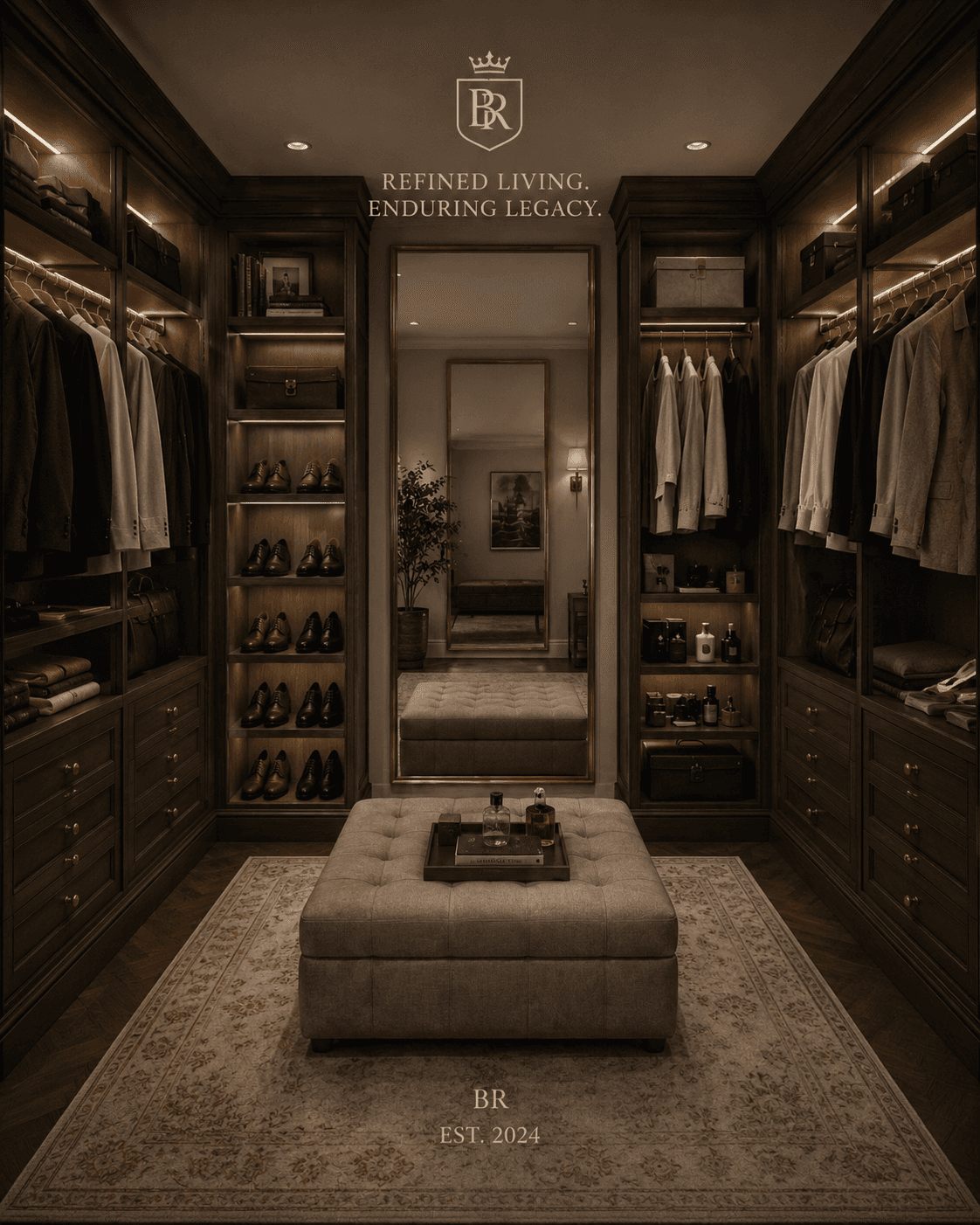
Designing a disciplined, heritage-inspired wardrobe space centred around architectural symmetry and textile curation
By Blackthorne & Rowe | The Interior Archives
“A tailored room, like a tailored coat, should feel like a second skin built to last.”
The traditional closet is frequently treated as pure utility—a hidden repository where clothes are crammed onto uniform wire hangers under harsh, overhead bulbs. For those who view clothing as a personal form of daily architecture, this approach misses a fundamental opportunity.
The act of dressing is the first creative decision you make each morning. The environment in which it occurs should establish an atmosphere of calm, order, and absolute focus. Rather than a storage unit, a well-conceived dressing space functions like a private atelier: a practical study that treats textiles and leather with curatorial respect.
By prioritising heavy timber joinery, warm layered lighting, and specialized garment-care methods, you can transform a utility closet into a permanent, highly disciplined sanctuary.
I. Apparel Storage: Preserving Every Garment Type
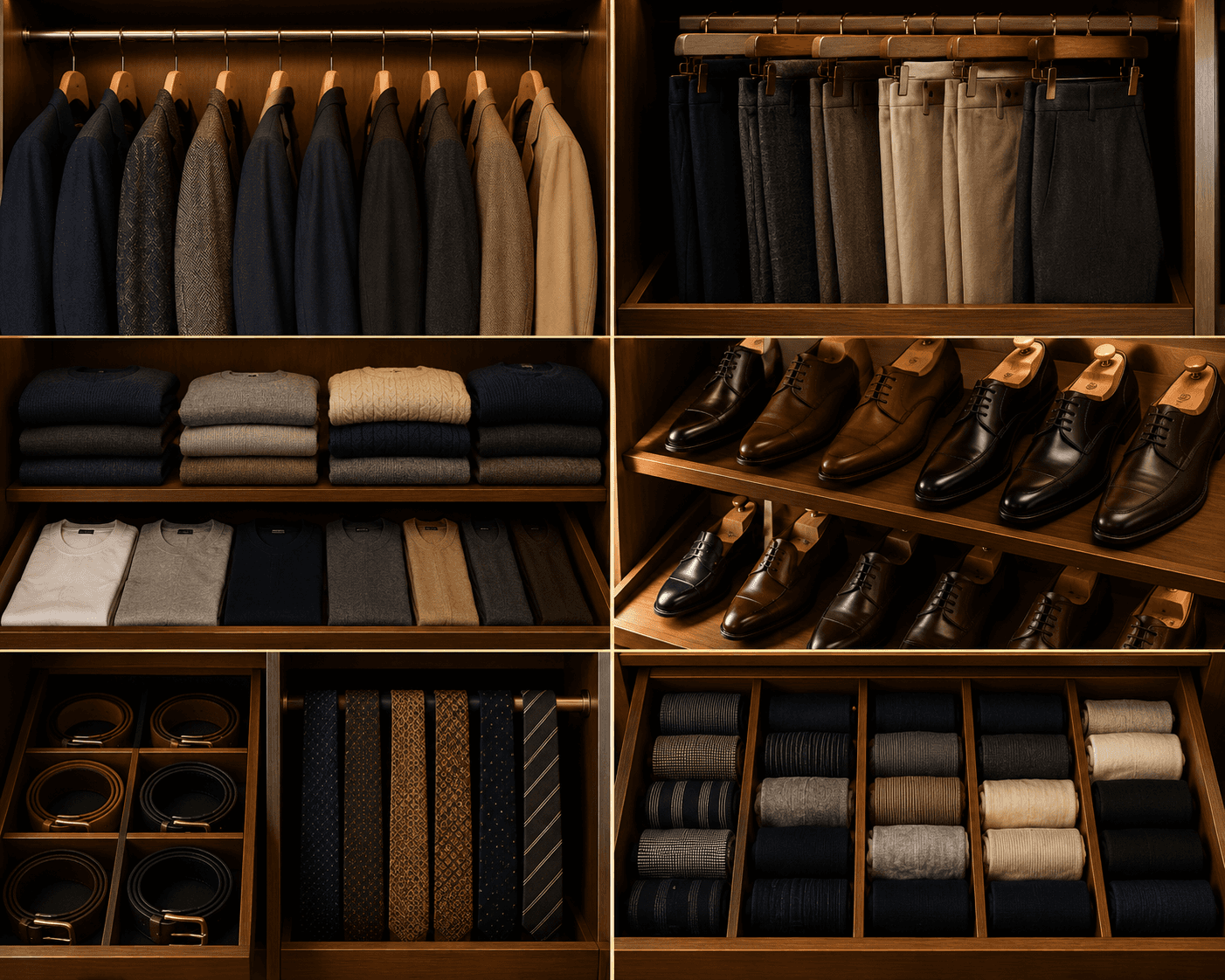
Storing clothing incorrectly ruins their structure, stretches the natural fibres, and creates unnecessary wear. Different textiles and cuts require specific, dedicated storage mechanics.
1. Tailored Suits, Blazers & Outerwear
Storage Method: Wide-Shouldered Hangers.
The Mechanics: Never hang tailored jackets on thin wood or wire hangers, which collapse the internal canvas and leave permanent dimples in the shoulder padding. Use 5-centimeter flared beechwood hangers that mimic human shoulder anatomy. Give structured coats at least 3 centimetres of breathing space on the rail to prevent lapel flattening.
2. Trousers & Chinos
Storage Method: Wide-Bar Hangers or Vertical Clamp Hangers.
The Mechanics: Dress trousers with a pressed centre crease should be folded along that crease and hung over a thick, velvet-padded trouser bar. The padding prevents a sharp horizontal fold mark across the thigh. Alternatively, use felt-lined clamp hangers along the bottom hem, hanging the trousers upside down so their own weight pulls out minor wear wrinkles naturally.
3. Knitwear, Sweatshirts & T-Shirts
Storage Method: Folded in Shallow Drawers or Shelves.
The Mechanics: Never hang knits, cashmere, or heavy cotton t-shirts. Gravity will stretch the necklines and pull the shoulders out of shape within weeks. Store folded t-shirts vertically (file-style) in shallow drawers so you can see every option at a glance without pulling from the bottom of a stack. Cashmere and heavy wool sweaters should be loosely stacked no more than three high on open shelves to allow air circulation.
4. Footwear & Shoe Trees
Storage Method: Angled Shelves with Raw Cedar Trees.
The Mechanics: As soon as you take off leather shoes, insert raw, unvarnished cedar shoe trees. Raw cedar absorbs interior moisture and salt while smoothing out vamp creases. Store shoes on open, angled shelves rather than closed boxes to let the leather air out fully between wears.
5. Belts, Ties & Leather Accessories
Storage Method: Rolled in Compartment Drawers or Hung Flat.
The Mechanics: Roll leather belts loosely from the buckle end and store them in velvet-lined drawer dividers; hanging heavy belts by the buckle over time can strain the leather around the prong hole. Silk ties should be loosely rolled or hung flat on a smooth tie rail. Never leave a tie knotted after wearing it, as this permanently damages the inner wool interlining.
6. Socks & Underwear
Storage Method: Segmented Drawer Grids.
The Mechanics: Stop folding sock cuffs over each other into tight balls, which ruins the elastic over time. Instead, lay socks flat, fold them in half or thirds, and line them up vertically in shallow drawer dividers. This preserves the stretch and keeps your drawer organized.
II. Structural Joinery & Layout Dimensions
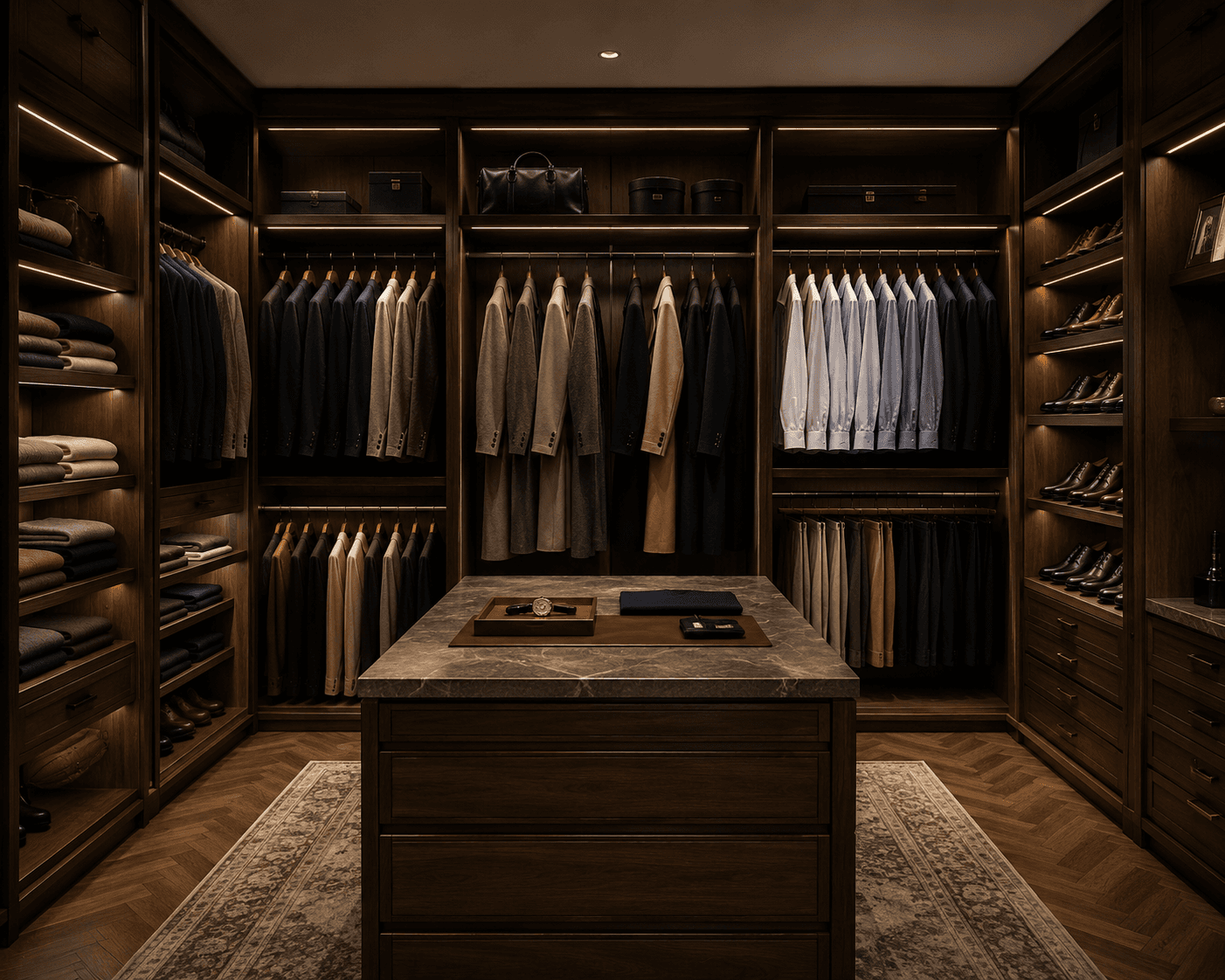
A luxury dressing room relies on architectural permanence. Standard laminate cabinetry or exposed metal racking lacks visual weight, resonance, and acoustic dampening. To ground the space, rely on floor-to-ceiling millwork built from dense hardwoods.
Material Selection & Tonal Contrast
Mid-to-dark timber finishes—such as solid Canaletto walnut, smoked European oak, or charcoal-stained ash—provide a solid visual anchor for a menswear palette. Dark wood grain absorbs harsh light while framing lighter textiles, allowing cream cashmere, white poplin, and grey flannel to stand out clearly.
Modular systems from heritage Italian joinery houses like Poliform and Boffi use pocket doors, hidden uprights, and integrated leather wall backings to keep the structure clean and unified.
Proportional Layout Rules
Depth Specifications: Standard suit jackets and structured coats require an internal cabinet depth of at least 60 centimetres (24 inches) to prevent shoulder pads from brushing against back walls or enclosure doors.
Vertical Ratios: Allocate double-hanging bays (105 centimetres per tier) for shirts, trousers, and sport coats. Reserve full-height single bays (150 to 160 centimetres) specifically for long overcoats, trench coats, and formalwear.
The Central Anchor: In larger rooms, introduce a low-profile central island topped in full-grain bridge leather or honed marble. This gives you a dedicated surface for laying out suit separates, ties, and timepieces for the following day.
III. Precision Lighting & Colour Temperature
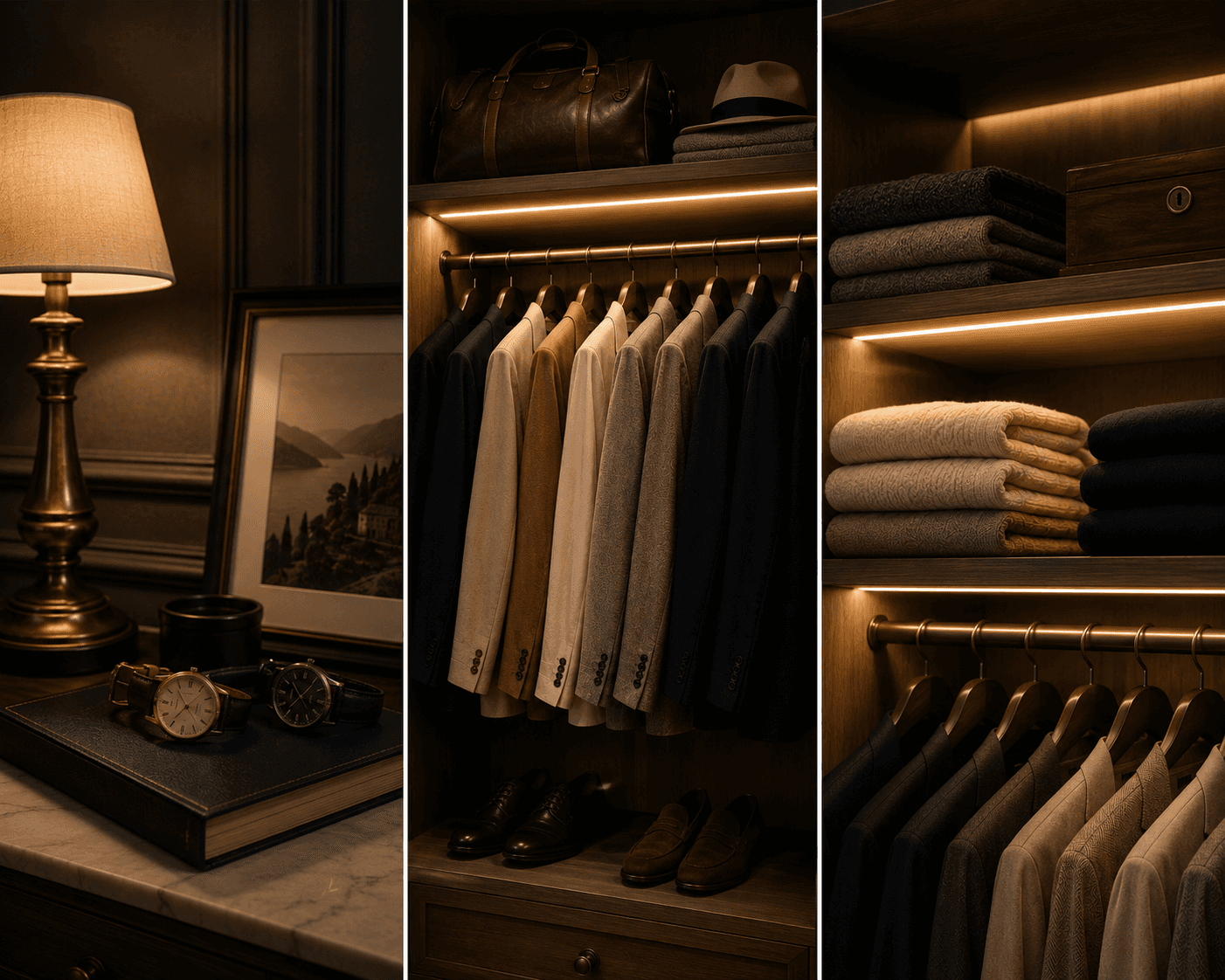
Lighting dictates how fine textiles, natural dyes, and leathers appear. Standard cold-white bulbs distort subtle tones and flatten the tactile depth of fabrics.
The 2700K Standard
Specify a warm colour temperature of strictly 2700 Kelvin across all fixtures. This warm spectrum highlights the rich oil patina of aged leather, the natural slub (deep texture) of raw linen, and the soft nap of suede without shifting navy suiting into black or cream knits into stark white.
Integrated Cabinetry Channels
Avoid using overhead ceiling lights as your main source of lighting. Instead, route concealed low-voltage LED strip channels directly into the front fascia or underside of every shelf and hanging rail.
When recessed behind diffuse frosted lenses, these hidden fixtures cast a downward and backward wash of light over your garments, eliminating harsh overhead shadows and illuminating individual fabric weaves from within the cabinet.
IV. Architectural Hardware & Tactile Touchpoints
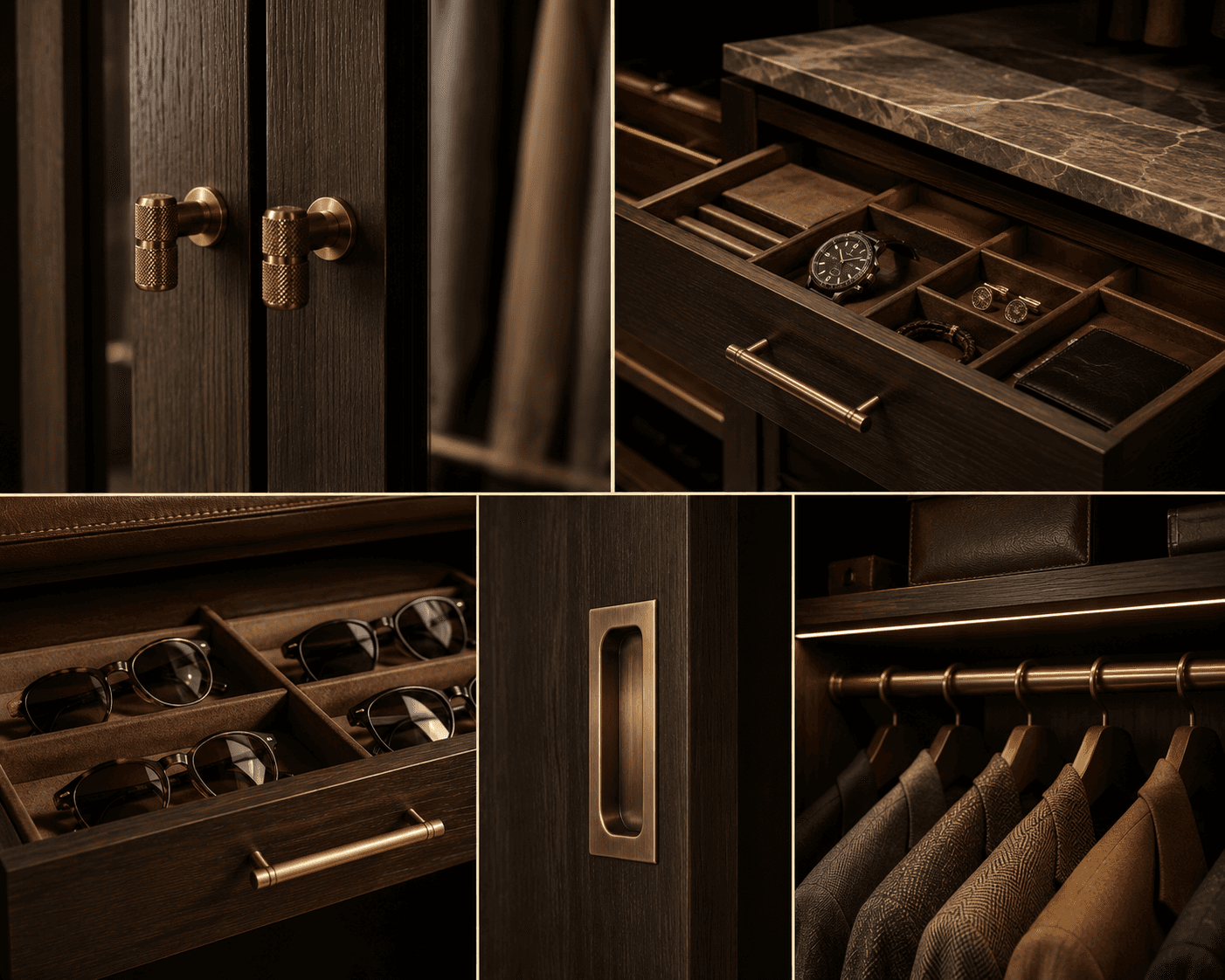
Because a dressing room is filled with soft textiles, your physical hardware needs to introduce structured, tactile contrast.
Living Metals over Plated Chrome
Skip high-gloss chrome or lacquer finishes that show fingerprints and feel cold to the touch. Specify unlacquered satin brass, dark aged bronze, or hand-knurled solid metal hardware.
Firms like Armac Martin and Buster + Punch craft solid brass knobs, pull bars, and flush door pulls that develop a rich, natural oxidation over time, responding to the touch of your hands much like fine leather goods.
Drawer Interiors & Surface Linings
Line accessory trays, watch drawers, and shoe displays with micro-suede, Alcantara, or vegetable-tanned bridge leather. These soft surfaces prevent scuffs on precious metals and watches while muffling the sound of daily items when set down.
Conclusion: Order in Daily Preparation
A tailored dressing room is a quiet study in domestic luxury. It is built not to show off a collection, but to provide personal clarity. By prioritising heavy hardwood millwork, warm recessed lighting, and specific garment preservation details, you ensure that every morning begins in an environment defined by discipline, purpose, and enduring craft.
At Blackthorne & Rowe , we document classical interior design, heritage sartorial blueprints, and regional architecture. Explore the Collection: Visit our digital archive for complete dressing room layout plans, textile preservation guides, and material directories.
Continue Through the Archive.


