The Sartorial Archive
Discover More:

The Capsule Registry: A Practical Guide for a Core Wardrobe
By Blackthorne & Rowe | The Sartorial Archives
“Building an intentional wardrobe isn't about owning less for the sake of it—it's about making sure everything you own works together.”
Most men buy clothes as individual items rather than as part of an overall system. The result is a closet full of clothes with nothing to wear. Shifting away from impulse purchases and synthetic fabrics toward a structured core wardrobe fixes that daily friction immediately.
When every piece in your closet shares a consistent colour palette, weight, and silhouette, getting dressed in the morning takes 30 seconds. Here is our practical guide to building a core wardrobe that lasts for years:
I. Setting Up Your Palette & Fit
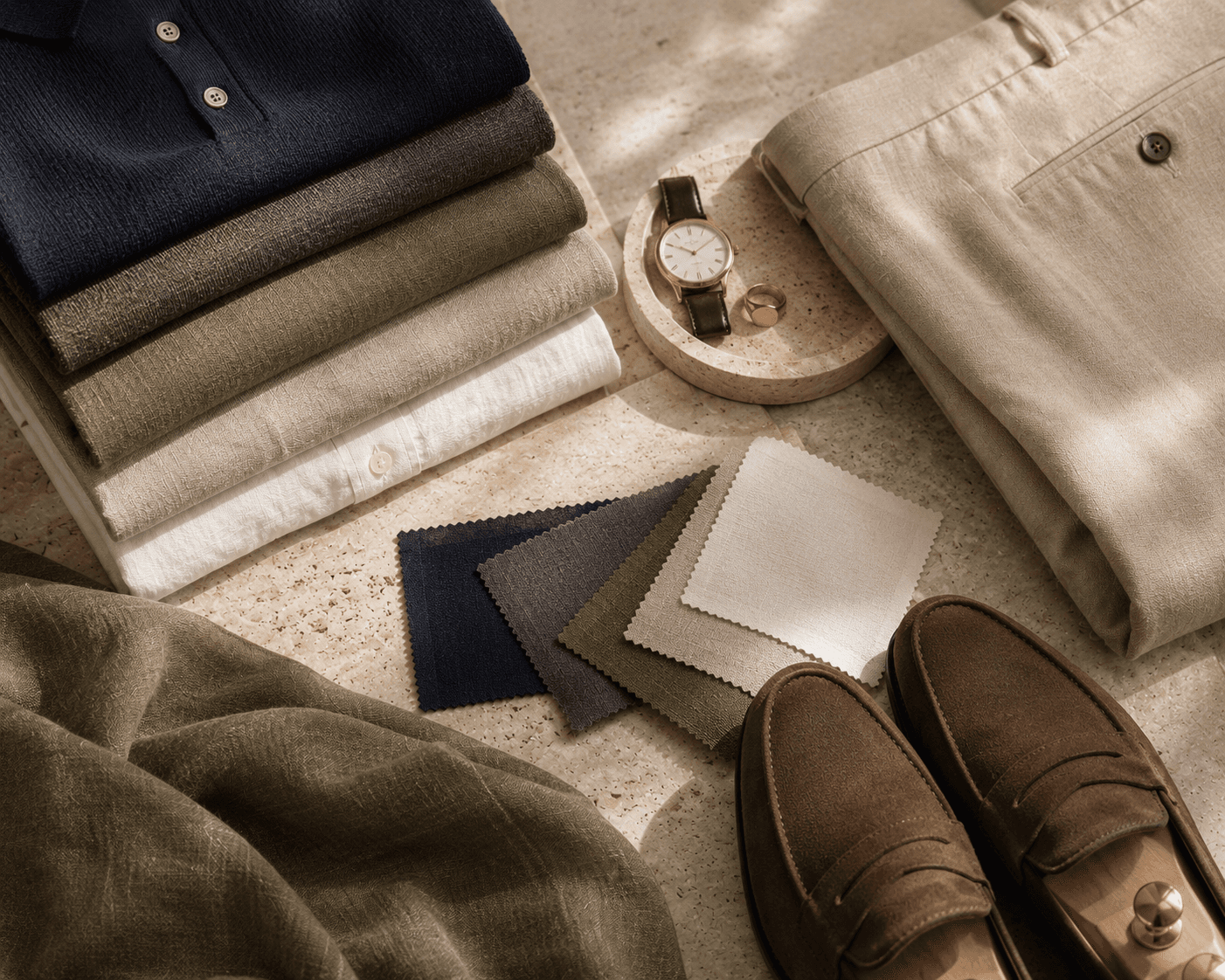
The Rules of Interchangeability
Before buying new clothes, establish the foundation rules. If a garment doesn't fit correctly or doesn't pair with at least three other items you already own, it shouldn't be in your closet.
Stick to Base Colours: Build your foundation around navy, charcoal grey, warm stone, brown, and white. These shades mix effortlessly without clashing.
Budget for Tailoring: A $100 pair of trousers adjusted by a local tailor to break perfectly over your shoes will always look better than an off-the-rack $500 pair that sits too long.
II. The Outer Layers
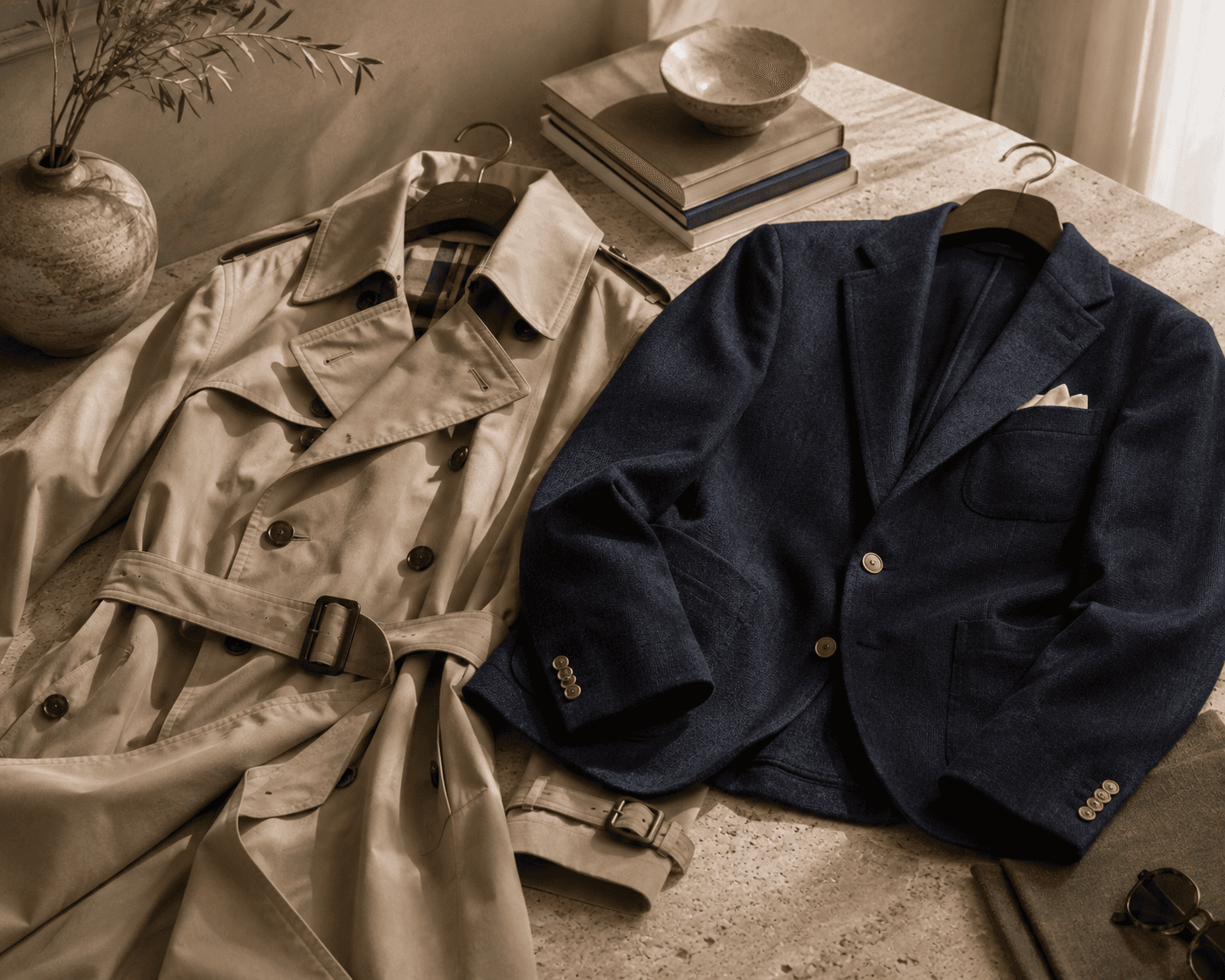
Structuring Your Silhouette
Outerwear carries the visual weight of your outfit during cooler months. Investing in two high-quality coats gives you complete coverage for both formal and casual settings.
The Cotton Gabardine Trench: A classic double-breasted trench handles rain and wind while adding a sharp profile over a sweater or suit. Look for 100% heavy cotton construction.
The Unstructured Hopsack Blazer: Ditch stiff, heavily padded suit jackets. A soft, unstructured navy blazer in breathable hopsack wool works just as well with dark denim as it does with grey trousers.
Where to Acquire: Drake's Unstructured Navy Hopsack Blazer
III. Shirts & Knitwear
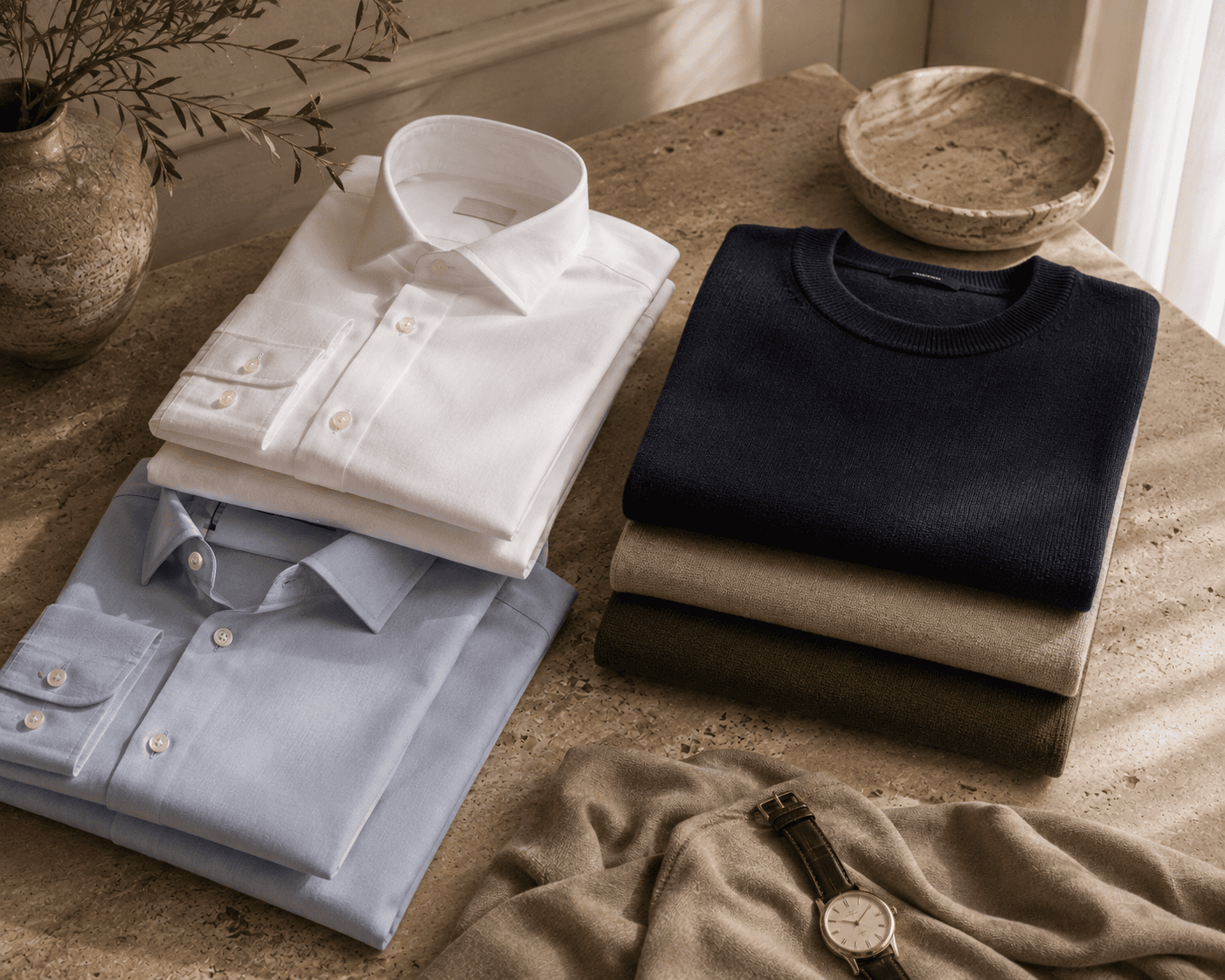
Focusing on Natural Fibres
Garments worn directly against your skin take the most abuse from wearing and washing. Synthetic materials like polyester trap heat and wear out quickly. Stick to natural, high-ply cottons and wools.
The Poplin Dress Shirt: Keep two white and two light-blue cotton poplin shirts on hand. Ensure the collar points are long enough to tuck neatly under a jacket lapel.
The Mid-Weight Crewneck: A mid-weight sweater in extra-fine Merino wool or two-ply cashmere provides clean layering options without bulk.
Where to Acquire: Luca Faloni Fine Merino Crewneck | Proper Cloth Custom Poplin Shirt
IV. Footwear & Leather Goods

Picks Built for Repair
Cheap shoes drag down an otherwise sharp outfit. Look for shoes built with traditional Goodyear-welted soles so you can take them to a cobbler to be resoled instead of throwing them away when the bottom wears out.
The Dark Brown Penny Loafer: Extremely versatile. Wear them with cuffed trousers in the summer or dark denim in the autumn.
The Leather Dress Belt: Match your belt leather directly to your shoes—a 1.25-inch dark brown calfskin belt covers almost every formal and smart-casual need.
Where to Acquire: Crockett & Jones Boston Penny Loafer | Ettinger Classic Leather Belt
Three Practical Shopping Rules
Check the Seams First: Turn a shirt or jacket inside out before buying it. Clean, tight interior stitching is the quickest indicator of good construction.
Feel the Fabric Weight: Heavier fabrics drape better on your body and resist wrinkling throughout the day compared to thin, flimsy materials.
The 5-Year Rule: Ask yourself if you can see yourself wearing the item five years from today. If it feels like a short-term trend, leave it on the rack.
Explore our complete wardrobe care guides and sartorial indexes at Blackthorne & Rowe
Continue Through the Archive.


