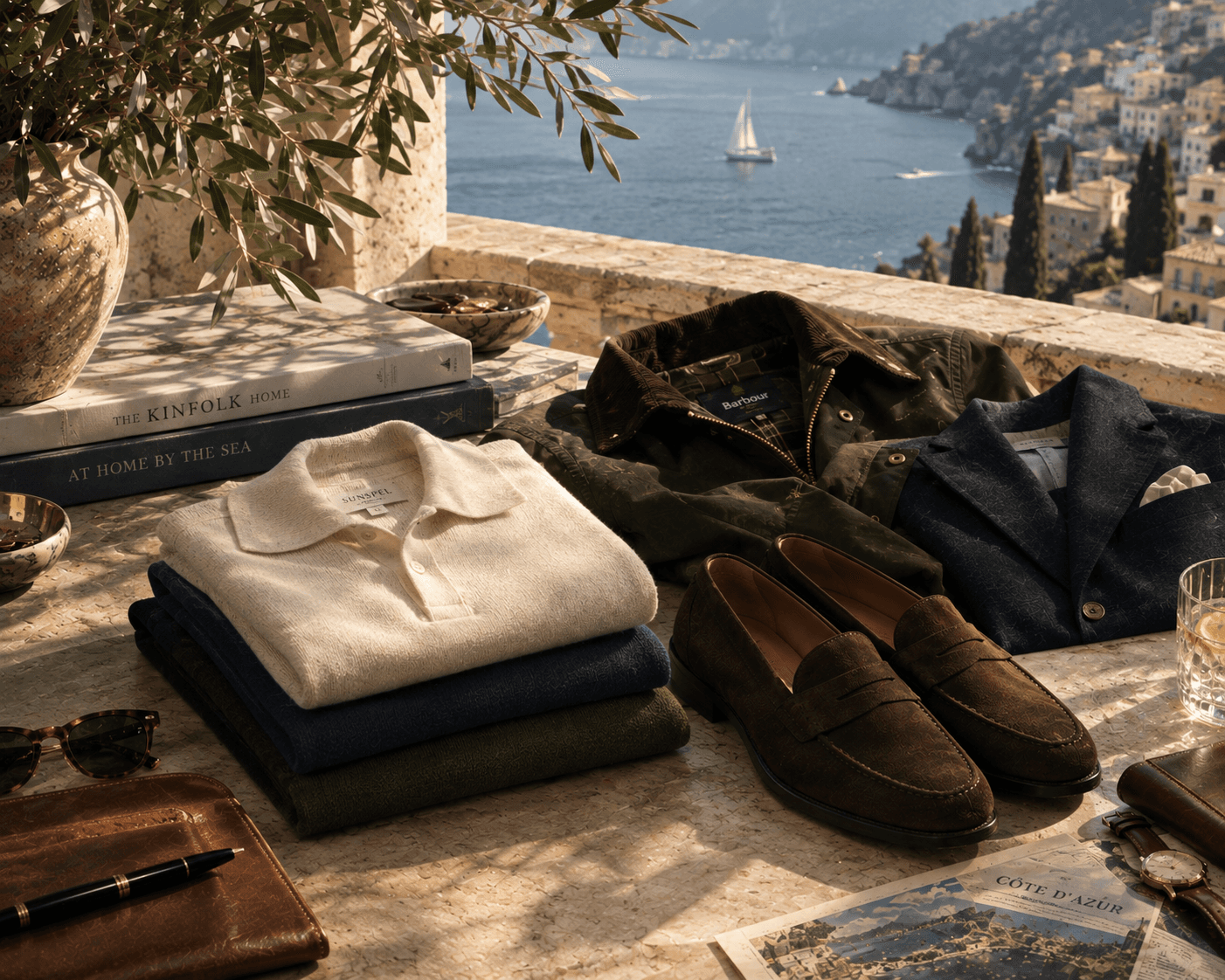
Timeless Travel
Discover More:

The Heritage Luggage Registry - A Guide To Luxury Suitcases & Carry-ons
By Blackthorne & Rowe | Travel & Escape Archives
"True luxury isn't found on the shelf—it's earned after fifty flights."
The modern airport terminal is flooded with disposable synthetic suitcases. But for the quiet luxury traveller, luggage is a seamless extension of personal style. Built to last every trip, and carry more than just your clothes, but the memories of all your travels.
If you are looking to buy once, and not need a replacement within one or two trips, investing in a proper carry-on requires looking past its branding. It comes down to rivet placement, silent wheel engineering, and shell materials that don't just survive transit, but actually look better for it.
Here are the five luggage makers that still build for the long haul:
I. The Register
Globe-Trotter (The Centenary Carry-On)
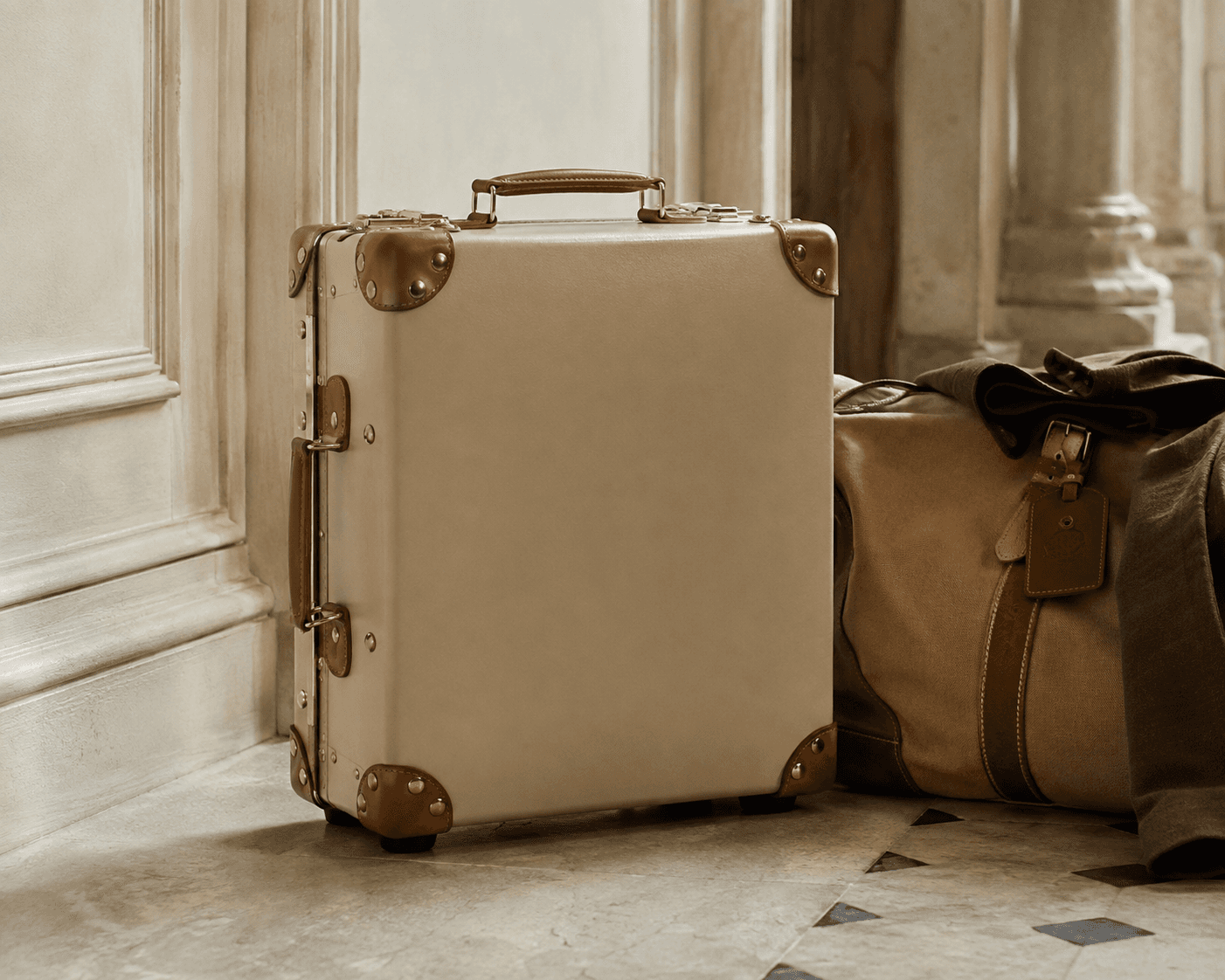
Origin: London, England (Est. 1897)
The Construction: Vulcanised fibreboard shell, hand-moulded leather corners, & wooden framing.
The Take: Globe-Trotter still uses Victorian-era machinery to bond fourteen layers of paper, cotton, and wood pulp. The result is a fibreboard shell lighter than aluminium, yet remarkably tough. As the leather corners darken and pick up subtle scuffs, it builds a character no nylon bag could ever match.
Rimowa (The Classic Cabin)
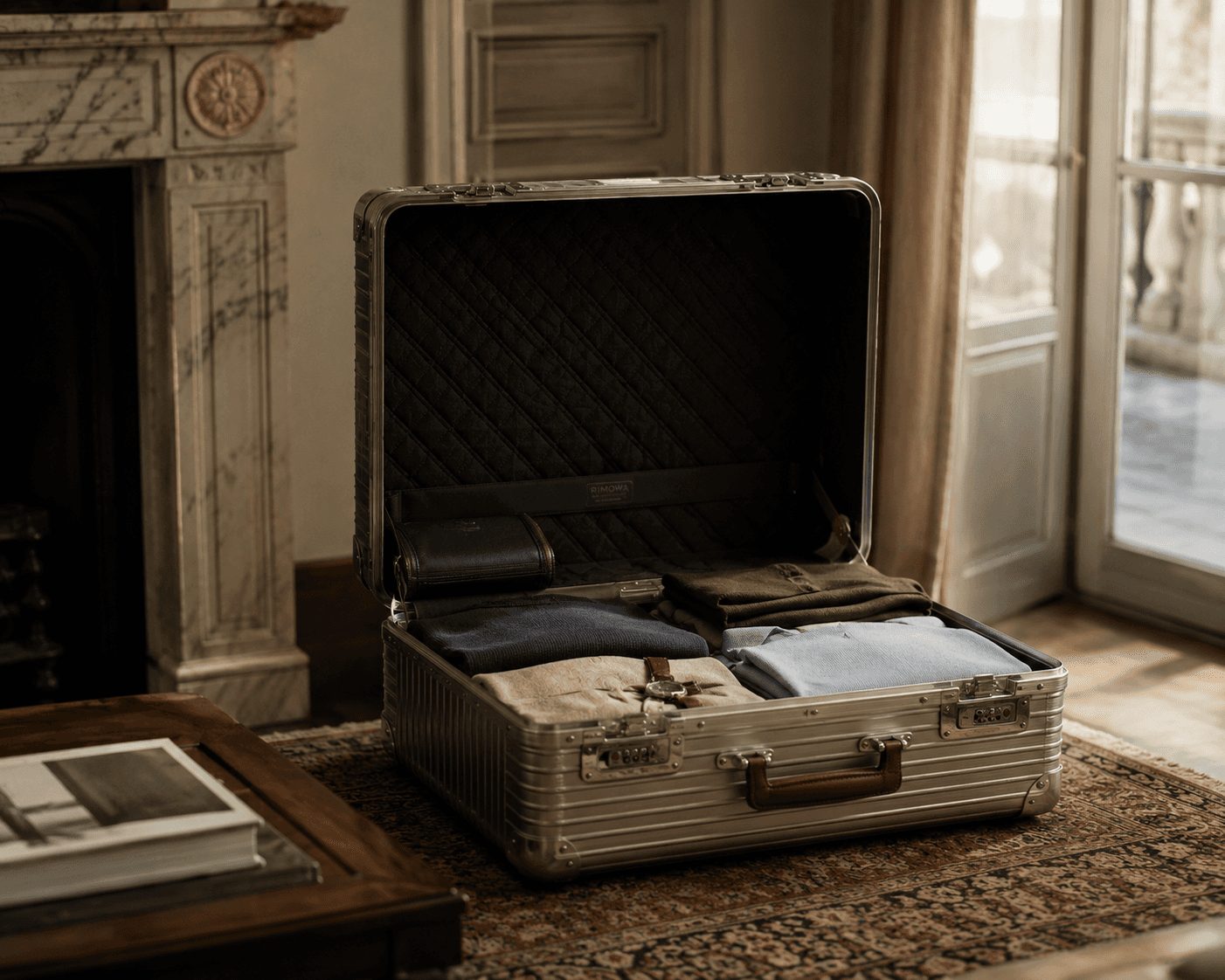
Origin: Cologne, Germany (Est. 1898)
The Construction: High-gloss anodized aluminium alloy, riveted corners, & custom leather handles.
The Take: Inspired by the golden age of aviation, the Classic Cabin is the benchmark for industrial elegance. Its parallel aluminium grooves add structural strength while keeping the silhouette sleek. It’s engineered to take heavy airport impacts, turning every minor dent into a badge of honour.
Carl Friedrik (The Trunk Carry-On)

Origin: London, England (Est. 2012)
The Construction: Polycarbonate core, solid aluminium lock frame, & Italian Vachetta leather trim.
The Take: A modern bridge between clean minimalism and traditional leatherwork. By replacing fragile zippers with a heavy-duty aluminium frame and dual combination locks, Carl Friedrik removes the most common point of failure in modern luggage.
FPM Milano (The Bank Spinner)
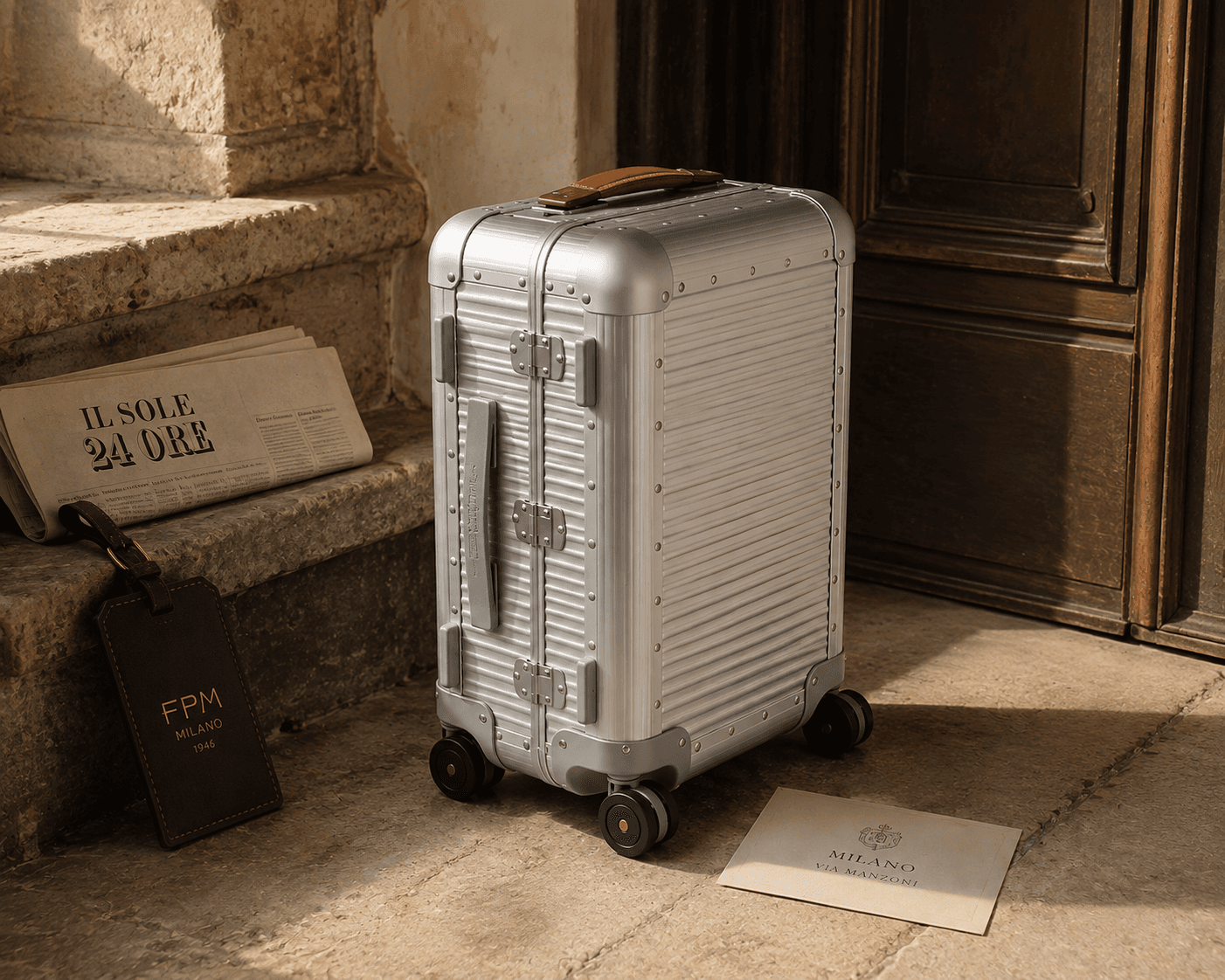
Origin: Milan, Italy (Est. 1946)
The Construction: Heavy-gauge aluminium shell, thick leather handles, & butterfly padlocks.
The Take: FPM treats luggage construction like safe-making. Designed in Milan, the Bank series swaps zippers for oversized mechanical butterfly clasps that lock with a reassuring weight. It’s built for those who demand maximum security and retro trunk styling.
SteamLine Luggage (The Architect Carry-On)
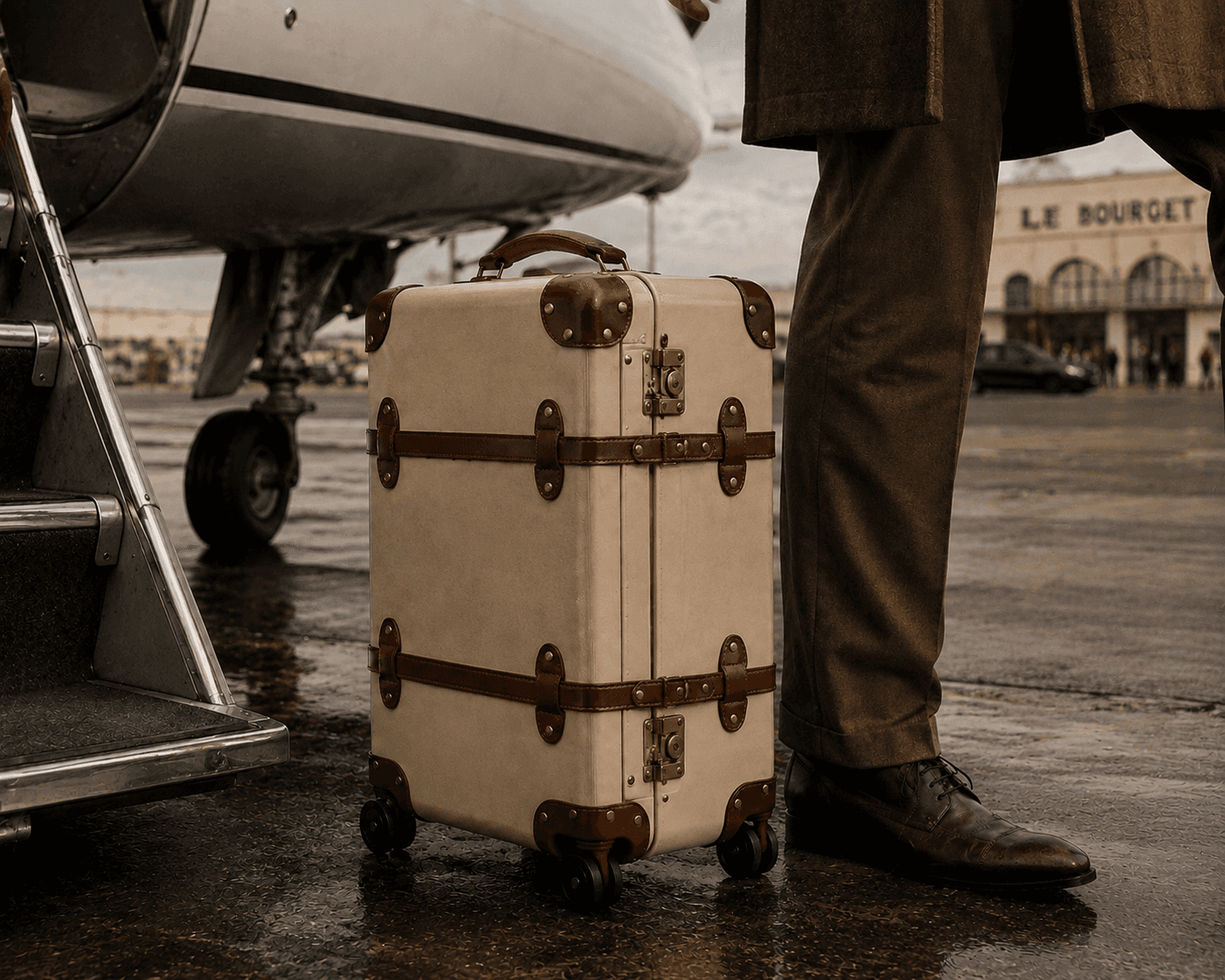
Origin: Dublin, Ireland (Est. 2005)
The Construction: Wrapped fibreboard body, stitched leather straps, & solid brass hardware.
The Take: A nod to the golden age of ocean liners and grand railway journeys. Hand-stitched leather straps and contrasting brass buckles bring a sense of deliberate, unhurried romance back to weekend travel.
II. The Pre-Flight Packing Guide
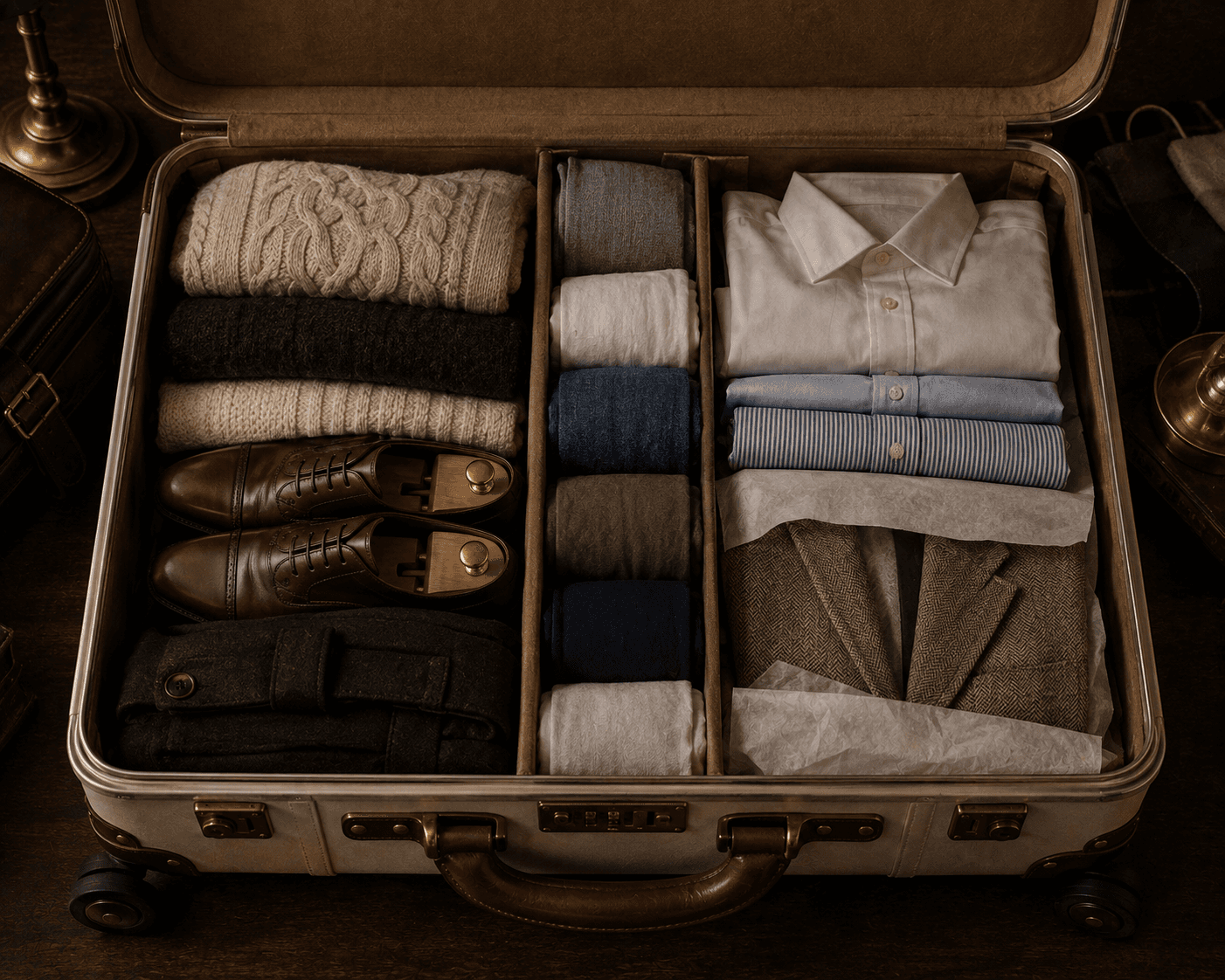
We have all encountered the difficulty of deciding what to bring, and how to fit it in your case. Packing a hard-shell carry-on effectively requires a balance between weight distribution and fabric care.
Heavy Items at the Base: Place coats, extra shoes (filled with cedar shoe trees or socks), and heavy outerwear at the bottom near the wheels. This lowers the bag’s centre of gravity and prevents tipping when resting upright.
The Interlocking Roll Method: Roll knitwear, tees, and casual trousers tightly to minimize volume and structural creasing. Reserve flat-folding for structured tailoring, linen shirts, and blazers.
Tissue Paper for Tailoring: Place sheets of acid-free tissue paper between folds of suits or delicate linen jackets. The paper reduces friction during movement, preventing stubborn travel wrinkles.
Dedicated Garment Dividers: Utilize built-in flex-divider systems (like those found in Rimowa or Carl Friedrik) to compress garments evenly without crushing natural fibres. You can explore our full weekend packing guide here.
III. Material Care & Maintenance
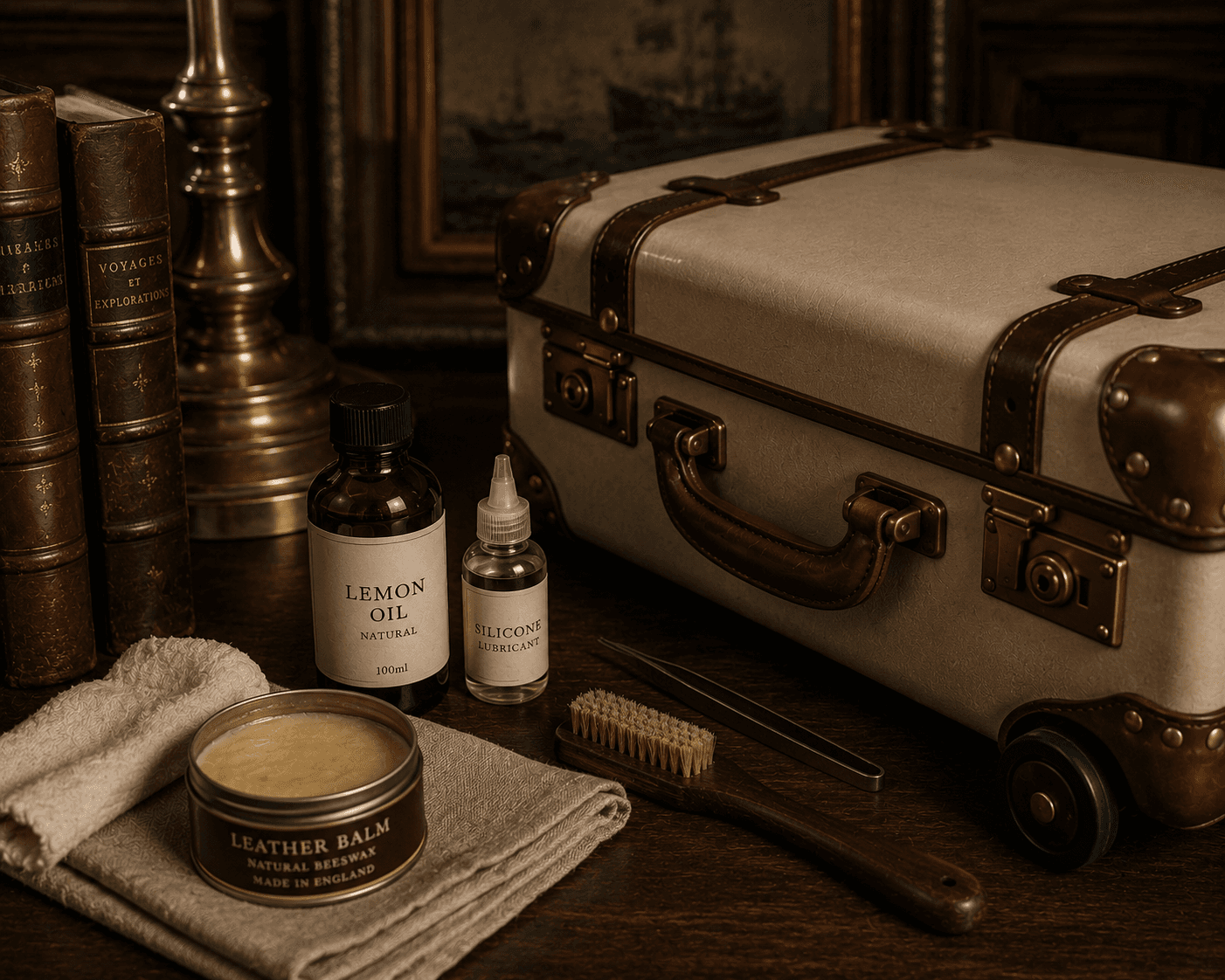
Noble materials require simple, occasional care to ensure decades of smooth transit.
Aluminium Care: Clean surface grime using a microfiber cloth dampened with warm water and mild soap. Avoid abrasive sponges. For minor scratches, let them age naturally; for stubborn sticker residue, use a drop of natural lemon oil rather than harsh chemical solvents.
Leather Corner & Handle Care: Apply a small amount of clear beeswax or natural leather balsam once a year using a soft cotton cloth. This nourishes vegetable-tanned hides, prevents cracking in dry aircraft cabins, and rich-tones the patina.
Wheel Mechanics: Hair, lint, and street grit accumulate in castor wheel bearings over time. Every six months, inspect the wheel housings and clear any debris with tweezers. A single drop of silicone lubricant on the axle ensures completely silent rolling through terminals.
IV. Unhurried Terminal Etiquette
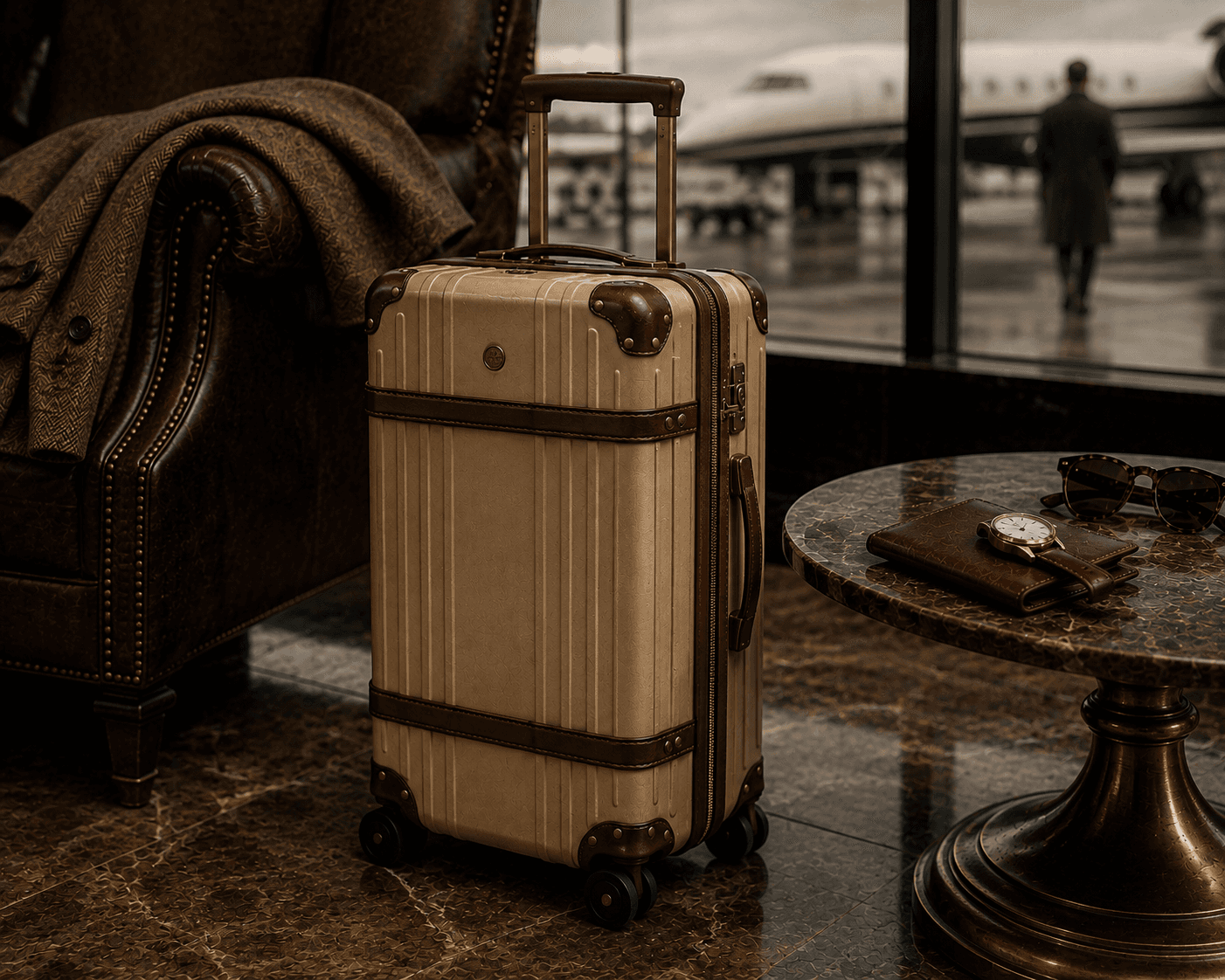
"True elegance in travel is never rushing."
Check the Latches Early: Unlatching heavy aluminium clasps or unbuckling leather straps while in a crowded security line creates unnecessary friction. Unfasten secondary straps prior to entering the queue.
Lift, Don't Drag, Over Obstacles: While 360-degree spinner wheels are built for polished marble floors, dragging them over cobblestones, high curbs, or train tracks damages the internal bearings. Use top handles to lift luggage over rough terrain.
Store Wheels-In First: When placing your carry-on into an overhead bin, always position it wheels-first or handle-first according to aircraft guidelines, keeping the flat base flush to maximize space for fellow travellers.
Continue Through the Archive.